


🔎 Reverse Image Search
Image search techniques made simple: upload a photo or paste a URL and search 6 engines at once. 100% free, nothing stored.
🔒 Your image is never stored on our servers longer than 24 hours and is never shared.
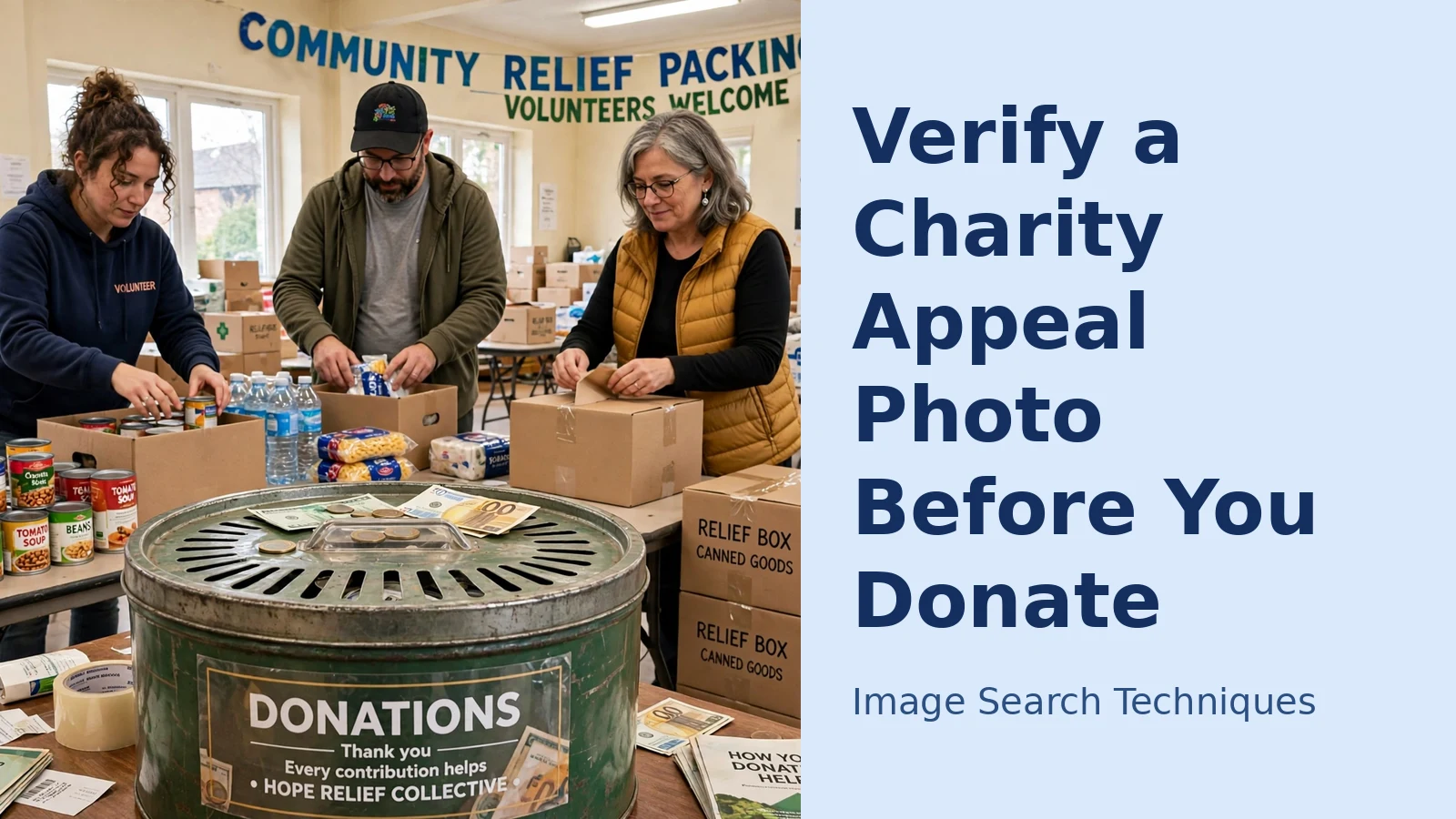
The photograph is heartbreaking: a child in rubble, a flooded street, a queue outside a shattered food bank. The appeal beneath it says the disaster happened yesterday, in a named town, and that your donation will help within hours. It might all be true. But disaster and charity appeal photos are among the most recycled images on the internet — pulled from older emergencies, other countries and unrelated events, then attached to whoever is collecting money today. Before you donate, the photo itself can tell you whether the appeal is what it claims to be, and the check takes about five minutes.
This matters for two reasons. The obvious one is fraud: fake appeals set up within hours of a real disaster, collecting for “victims” through pages that will vanish by the weekend. The subtler one is misdirection by genuine fundraisers — a real charity or well-meaning amateur, illustrating today’s crisis with a photo from a different one. Either way, if the picture is not from the event described, you are not being told the truth, and your money deserves a more honest destination.
Why appeal photos get recycled
Real disaster photography is chaotic and often unusable in the first hours, while an appeal needs a powerful image immediately. So pictures migrate. A flood photograph from one country illustrates flooding on another continent. An earthquake image from a decade ago resurfaces after every new quake, because it is dramatic, high-quality and already detached from its caption. Photos of one war’s refugees are used for another’s. Sometimes the borrowing is lazy rather than malicious — a community fundraiser grabbing the first moving image a search returns — but the effect on you is the same: the evidence in front of you does not belong to the appeal asking for your money.
There is a newer wrinkle, too: synthetic and edited images now appear in appeals. You do not need to detect those pixel by pixel — the check below works the same way on all of them: find where the image comes from.
Step 1: Reverse search the photo and find its first appearance
Save the appeal’s main photograph — the largest version you can get, cropped free of the page’s text and buttons — and run it through a reverse image search. Our free reverse image search tool checks one picture across six engines at once. What you are hunting for is not just a match but the oldest match: the earliest dated page carrying that image is usually close to its real origin. Engines that sort results by date make this much easier — our TinEye reverse image search guide explains its oldest-first and first-seen sorting, which is built for this job.
Read the earliest results carefully. Note the date of the oldest page, the event it describes, and the place it names. If the “yesterday, in this town” photograph appears on a news page from six years ago about a different country, the appeal has failed its first test — no explanation about “illustrative images” changes the fact that you were shown evidence that was not evidence.
Step 2: Check the photo’s real context against the appeal
Sometimes the photo is old but the mismatch is subtler — same type of disaster, wrong year; right country, wrong region; a genuine aid photo reused by an unrelated campaign. Compare three things between the original context and the appeal in front of you:
- Date. Does the earliest appearance predate the event in the appeal? Disaster photos cannot be taken before the disaster. Even a gap of weeks, for an appeal claiming to show this week’s emergency, is disqualifying.
- Place. Signs, number plates, vegetation, architecture and weather in the image all carry location clues — the techniques in our guide to working out where a photo was taken apply directly. Palm trees and left-hand traffic in a photo supposedly taken in northern Europe should stop your donation mid-click.
- Event. Was the original picture taken at a protest, a training exercise, a film set or a different emergency entirely? Recycled photos frequently keep their emotional charge while losing their entire meaning.
If the search returns nothing at all, that is not proof the photo is genuine — brand-new and private-source images may simply not be indexed. Try the follow-ups in our guide to reverse image search with no results, and treat an unverifiable photo as a reason to give through a channel you can verify, rather than as a pass.
Step 3: Check who is collecting the money
A truthful photo is only half the test; the collector matters just as much. If the appeal names a registered charity, check that the charity exists and that the appeal is really theirs. In England and Wales you can search the official Charity Commission register of charities by name or registered number in under a minute — and a genuine charity appeal will print that number proudly, because it costs them nothing and proves everything. Then donate through the charity’s own website rather than the page that showed you the photo, so an impersonator’s link cannot skim your gift.
For individual fundraisers and social media appeals, the bar is different but not lower. Is the page established or created this week? Does it name a verifiable organiser, a specific destination for funds, and a closing update promise? Crowdfunding for a named local family after a fire can be entirely genuine — but it should survive basic questions, and the FTC’s consumer advice makes the same point: legitimate fundraisers welcome scrutiny, fraudulent ones manufacture urgency to prevent it.
Red flags that should pause any donation
- The photo fails the date test — it demonstrably predates the disaster it is meant to show.
- No registered charity number, or a number that does not match the name on the register.
- Payment by gift card, cryptocurrency or personal bank transfer — routes chosen because they are hard to trace or reverse.
- A brand-new page or profile created after the disaster, with no history and no named organiser.
- Pressure and guilt — countdowns, “children are dying while you read” copy, and anger at anyone asking questions.
- Stock-photo polish — an image that looks like an advertisement, because in the original it probably was one.
One flag might have an innocent explanation. A recycled photo plus any other flag is a pattern, and patterns are what you are checking for.
Want the deeper method? This is the short version of a professional workflow
What you have just done — find the earliest appearance, test the context, verify the claimant — is a compressed version of how newsrooms check images before publishing them. If you verify photos regularly, for a community group, a workplace giving scheme or your own page, the full process in our guide to reverse image search for journalists and fact-checkers adds version comparison, metadata cross-checks and a documentation habit that makes your conclusions defensible. For a one-off donation, the five-minute version above is enough. And when an appeal fails your checks, do not let the money stay in your pocket by default: give it instead through an established disaster appeal or the registered charity’s own site, where the photo was taken by their photographer, at the event they name, for the people you meant to help.
FAQs
Does a recycled photo always mean the appeal is a scam?
Not always — some genuine fundraisers illustrate an appeal with an old or stock image carelessly rather than fraudulently. But it always means the appeal misled you, and it removes your reason to trust the rest of it. Donate through the charity’s own channels instead, where you do not have to guess.
What if the reverse search finds nothing?
The photo may be new, private or simply unindexed, so treat the result as “unverified”, not “genuine”. You can still check the collector: a registered charity number that checks out, and donating via the charity’s own website, protects you even when the photo cannot be traced.
How do I check a charity is real in the UK?
Search the Charity Commission’s register of charities for England and Wales by the charity’s name or registered number — genuine appeals display the number. Scotland and Northern Ireland have their own regulators (OSCR and the Charity Commission for Northern Ireland) with equivalent registers.
An appeal moved me and passed the photo check. Anything else before I give?
Yes: go to the charity’s official website yourself rather than donating through the link in the post, confirm the appeal is listed there, and pay by card so the payment is traceable. If anything about the destination account is personal rather than organisational, stop.
For a personal fundraiser on GoFundMe rather than a registered charity, the checks are different — learn how to check if a GoFundMe is legitimate before you donate.
