


🔎 Reverse Image Search
Image search techniques made simple: upload a photo or paste a URL and search 6 engines at once. 100% free, nothing stored.
🔒 Your image is never stored on our servers longer than 24 hours and is never shared.
Backlinks are still one of the strongest ranking signals, and images are an underused way to earn them. People love to share, embed, and reference good visuals — and when they do, you can turn that into links back to your site. This guide covers image link building in 2026: what actually works now, and how to use reverse image search to reclaim links you’ve already earned without knowing it.
Quick answer: Build links with images by creating share-worthy infographics and original visuals, pitching them to relevant sites, and — the fastest win — using reverse image search to find sites already using your images without credit, then asking them for a link. Focus on quality, relevant sites; a few good links beat hundreds of junk ones.
What is image link building?
Image link building is the practice of earning backlinks using visual content — infographics, diagrams, charts, photos and other graphics — instead of plain text. Because images are easy to share and embed, they attract links and mentions naturally. The links then pass authority to your site and help it rank, exactly like any other backlink.
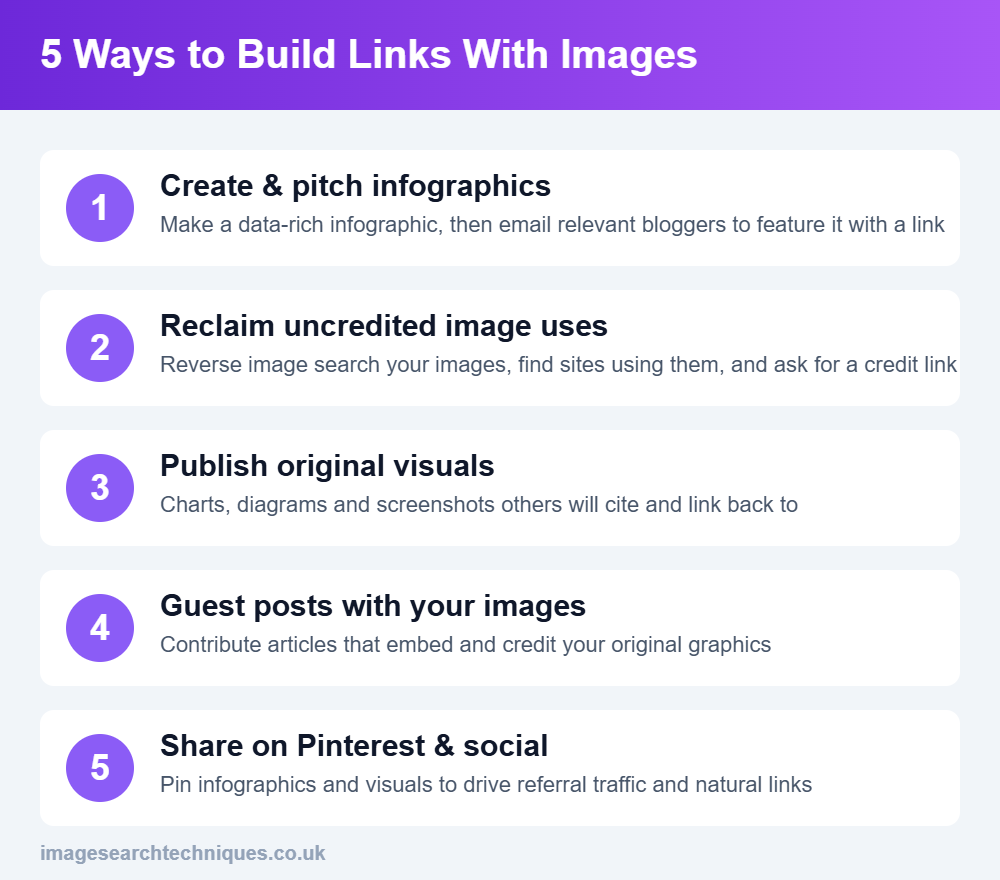
5 ways to build links with images
1. Create and pitch infographics
A clear, data-backed infographic is the classic link magnet. Publish it on your site, then email relevant bloggers and journalists offering it as a resource (with an embed code that includes a link back). One strong infographic can earn dozens of links over time.
2. Reclaim uncredited uses of your images (the fastest win)
This is the highest-ROI tactic and it plays directly to reverse image search. Many sites already use your images — they just didn’t link to you. Find them and ask for a credit link. Reverse search your images with Google Lens, TinEye (best for exact copies), or other engines, then reach out. Our guide on finding where your photos are used online shows the full process. These links are easy because the site already values your image.
3. Publish original visuals worth citing
Original charts, diagrams, screenshots and research visuals get cited — and citations become links. Make visuals that explain something clearly or show data no one else has; writers linking to “the source of that chart” is pure, natural link building.
4. Contribute guest posts with your images
Write genuinely useful guest articles for reputable sites in your niche and include (and credit) your own original graphics. You earn a contextual link, and the image gives the host real value, making acceptance more likely.
5. Share on Pinterest and social
Pinterest is a visual search engine in its own right — pins of infographics and product images drive referral traffic and surface your visuals to people who may link to them. Share the same assets on X, LinkedIn and relevant communities to widen their reach.
How reverse image search powers link reclamation
Because this is the easiest win, here is the exact workflow:
- Pick your most-used original images (infographics, popular photos).
- Reverse image search each one in TinEye and Google Lens to list every site using it.
- Filter to sites that used the image but did not link to you.
- Email the site owner: thank them for using it, and politely ask for a credit link to the source.
- Track replies — a friendly ask converts a surprising share of them into links.
For tracing an image back to its true origin first, see how to find the original source of a photo.
Quality over quantity — avoid spammy links
Not all links help. Links from low-quality, irrelevant or spammy sites can actually hurt you, and buying bulk links violates Google’s spam policies. Aim for relevant, reputable sites, keep anchor text natural, and never pay for link packages. Ten good links beat a thousand junk ones.
How to measure results
Track new referring domains in Google Search Console (Links report) and your SEO tool. Watch which images earn the most links and make more like them. Link building is slow — expect weeks to months, not days.
FAQ
What is image link building?
Image link building is earning backlinks using visual content — infographics, diagrams, charts and photos — which people share, embed and cite, passing authority to your site.
How do I use reverse image search for link building?
Reverse search your images in TinEye or Google Lens to find sites using them without a link, then email those owners and ask for a credit link back to the source.
Do images really help SEO?
Yes. Images attract shares and citations that turn into backlinks, and well-optimised images also bring traffic from Google Images and visual search.
Is buying image backlinks safe?
No. Buying bulk or low-quality links violates Google’s spam policies and can hurt your rankings. Earn relevant links from reputable sites instead.
What kind of images earn the most links?
Original, useful visuals — data infographics, clear diagrams, and research charts — earn the most, because writers cite them as a source.
Related guides
- Is Someone Using My Photos Online?
- TinEye Reverse Image Search
- Google Reverse Image Search
- Find Similar Images: How to Search by Picture
- How to Find the Original Source of a Photo
