


🔎 Reverse Image Search
Image search techniques made simple: upload a photo or paste a URL and search 6 engines at once. 100% free, nothing stored.
🔒 Your image is never stored on our servers longer than 24 hours and is never shared.
Quick answer: Yes, you can find stolen items with a photo by running a reverse image search on your own pictures of the item, then checking the resale sites where stolen goods are usually listed. Upload your clearest photo to Google Lens or Bing Visual Search, look for matches on eBay, Facebook Marketplace and Gumtree, and search those sites directly using the item’s distinctive details. If you find a matching listing, do not contact the seller yourself — save the evidence and report it to the police.
Get your own photos ready before you search
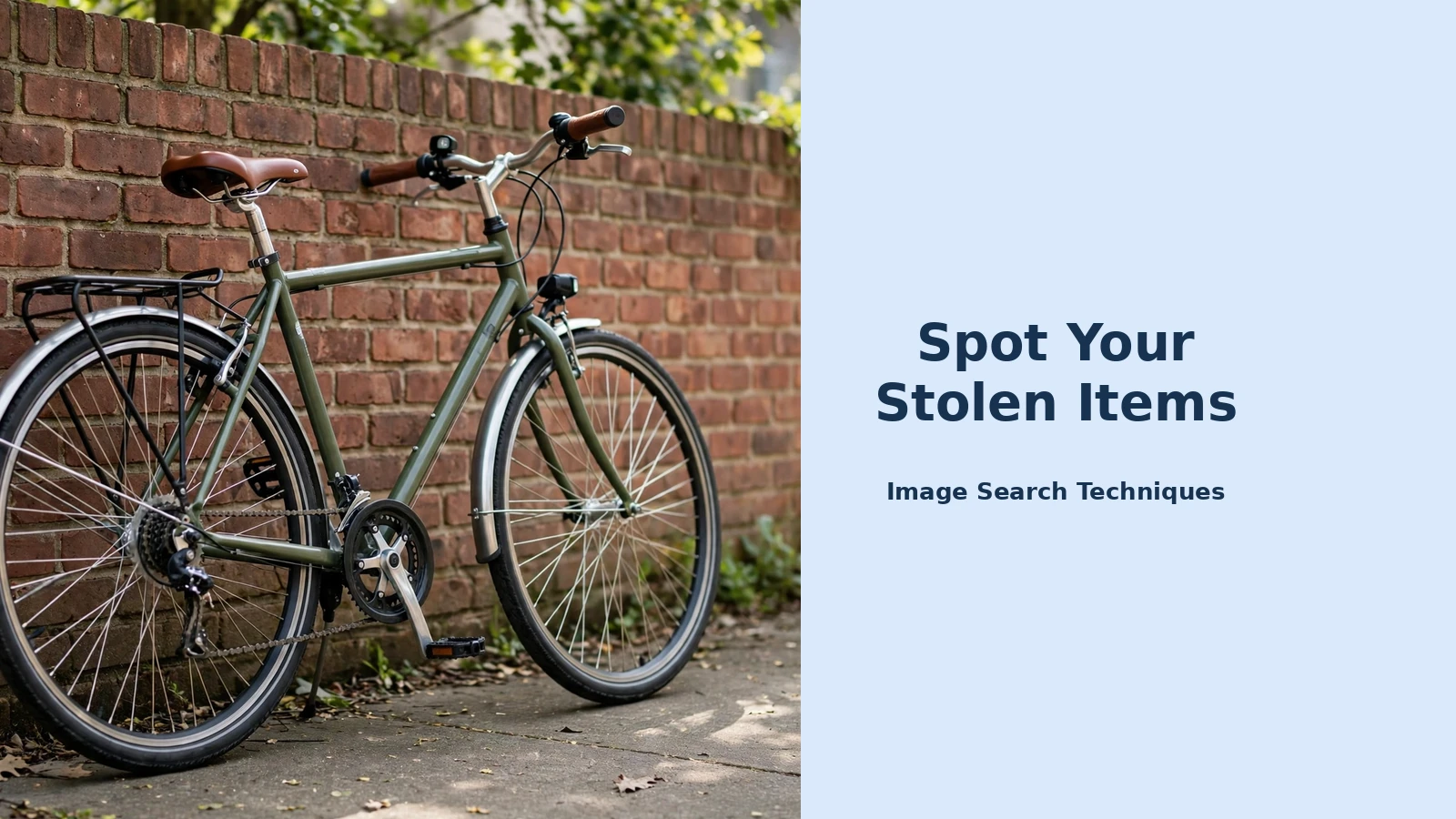
A reverse image search is only as good as the photo you feed it, so start with the best pictures you have. The clearest shot is usually the one you took when the item was new: a bike leaning against a wall, a guitar on its stand, a watch on your wrist. Check your camera roll and old social posts.
Pick two or three different angles if you can. A front view helps the search engine recognise the model, while a close-up shows what makes yours different: a scratch, a sticker, a worn patch. Also gather the facts that prove it is yours: make, model, colour, size, serial number, and when and where it was stolen. If your bike is registered on BikeRegister, find your frame number now.
How to find stolen items with a photo using reverse image search
Reverse image search compares your photo with images published across the web, including many marketplace listings. It will not search every resale site, but it is the fastest way to check whether your item has appeared somewhere new.
Start with the free tool on this site. Open the free reverse image search tool on the homepage, upload your clearest photo, and run the search through Google Lens. Lens is usually the strongest option for matching an object to other photos of the same object online. See our guides to Google reverse image search and how to reverse image search for the exact clicks. Then try a second engine: Bing Visual Search sometimes finds listings Google misses, and TinEye finds exact copies of a photo, for example if a seller lifted a picture from your Instagram post.
Search the full photo first, then crop to the item’s most distinctive detail — a serial-number sticker, a dent, a custom part — and search the crop too. Cropped searches often find matches the full image misses. You are looking for a private seller’s listing, usually with a phone photo, a low price and a vague description.
Search the resale sites directly as well
Reverse image search only finds listings that search engines have indexed, and many marketplace adverts never appear in those results. So search the marketplaces themselves, every day, for at least the first two weeks after the theft. Thieves usually want quick cash, and stolen goods often appear online within days.
Start with the big three in the UK: eBay, Facebook Marketplace and Gumtree. On eBay, use the app’s search-by-image feature as well as keyword searches, and save your search so eBay emails you when a new matching listing appears. Think about how a thief would describe your item: they may not know the exact model name, so try plain words too — “mountain bike” instead of the full model name — and common misspellings. Broaden the area as well: a bike stolen in Manchester may be listed in Leeds or Liverpool.
Set up alerts wherever the site allows them. Saved searches and email alerts do the watching for you, which matters because new listings appear around the clock. Check alerts morning and evening; a listing can sell within hours, and once it is gone the seller’s details may be much harder to recover.
How to tell a listing really shows your item
Thousands of identical bikes, phones and tools are sold online every day, so a similar listing is not proof. Before you act, make sure the item in the advert is actually yours. Compare the listing photos with your own detail by detail: the same scratch, sticker, wear pattern or aftermarket part. These small marks are your item’s fingerprint.
Serial numbers settle the question when they are visible. Many sellers photograph a frame number or rating plate without realising what it shows. If the number in the listing matches the number on your receipt, warranty card or BikeRegister record, you have strong evidence. Never publish the serial number yourself while you are searching — keep it private until you hand it to the police.
Look at the seller as well as the item. A genuine seller usually has a history: older listings, an established profile, buyer reviews. Be honest about what you can prove, too: if the item is a common model with no distinguishing marks and no serial number recorded, even a matching photo may not be enough for the police. Save the listing anyway — if more evidence turns up later, it may still help.
What to do when you find your stolen item for sale
Finding your bike or laptop in a stranger’s listing is infuriating, but the next steps matter more than the discovery. Do not message the seller, do not arrange to meet them, and do not try to buy the item back yourself. Meeting someone who may have stolen from you — or who bought stolen goods knowingly — is dangerous and can damage any police case.
Preserve the evidence first. Screenshot the whole listing: the photos, the price, the description, the seller’s name and profile, the location and the date. Save the listing’s web address and, if the site allows it, download the photos. Listings can be edited or deleted in minutes, so capture everything first.
Then report it. If you have not already reported the theft, do so now: in the UK you can report a crime by calling the police on 101 or contacting them online, and you will receive a crime reference number. Give the police the listing link, screenshots, serial number and proof of ownership, and let them decide how to approach the seller. Report the listing to the marketplace as well, using the “stolen item” reason and including your crime reference number.
Make your things easier to find next time
Most people only discover they have no useful photos of their belongings after something is stolen. A few minutes now can save weeks of searching later. Photograph every valuable item you own: front, back and side, plus a close-up of the serial number and any distinctive marks. Store them in a cloud album, so they survive even if your phone is stolen. Keep a simple list alongside the photos: make, model, serial number, date bought and approximate value, with the receipt saved next to it. See our guide on how to find an item by image.
If the missing item is a camera, you can also find a lost or stolen camera using a photo’s EXIF serial number — its serial number is hidden in the photo’s EXIF data and can be searched online to trace it.
For bikes, register before anything goes wrong. BikeRegister is the UK’s national, police-preferred bicycle marking and registration scheme, and police forces across the UK use it to check recovered bikes against their owners. BikeRegister puts estimated bicycle theft incidents in 2024 at 213,000, based on the Crime Survey for England and Wales.
Finally, mark what you own. A UV pen, engraving or security label with your postcode makes an item harder to sell and easier to identify. Read our complete guide to reverse image search to practise the search steps now, while nothing is missing, so you are ready if the worst happens.
FAQs
Can I find stolen items with a photo if I only have a picture from social media?
Yes, a social media photo can work, though a clear original photo is better. Download the best-quality version you can, crop out clutter, and run it through Google Lens and Bing Visual Search. If the thief copied your own photo into their listing, TinEye is especially good at finding that exact copy.
Will the police recover my item if I send them a listing?
A listing alone is rarely enough, but with proof of ownership it can be. Give the police the listing link, screenshots, the serial number, your receipt or registration record, and your crime reference number. They can contact the marketplace for the seller’s details and decide whether there is enough evidence to act.
Should I buy my stolen item back from the seller?
No. Paying the seller rewards the theft, with no guarantee of getting the item or your money back. Meeting the seller is also a safety risk. Report the listing to the police and the marketplace instead, and let the police recover the item through the proper process.
How long should I keep checking resale sites after a theft?
Check daily for at least two weeks, then weekly for another month or two. Most stolen goods appear quickly, but some sellers wait before listing, and items sometimes resurface when they are sold on a second time. Saved-search alerts will keep watching after you stop checking by hand.
