


🔎 Reverse Image Search
Image search techniques made simple: upload a photo or paste a URL and search 6 engines at once. 100% free, nothing stored.
🔒 Your image is never stored on our servers longer than 24 hours and is never shared.
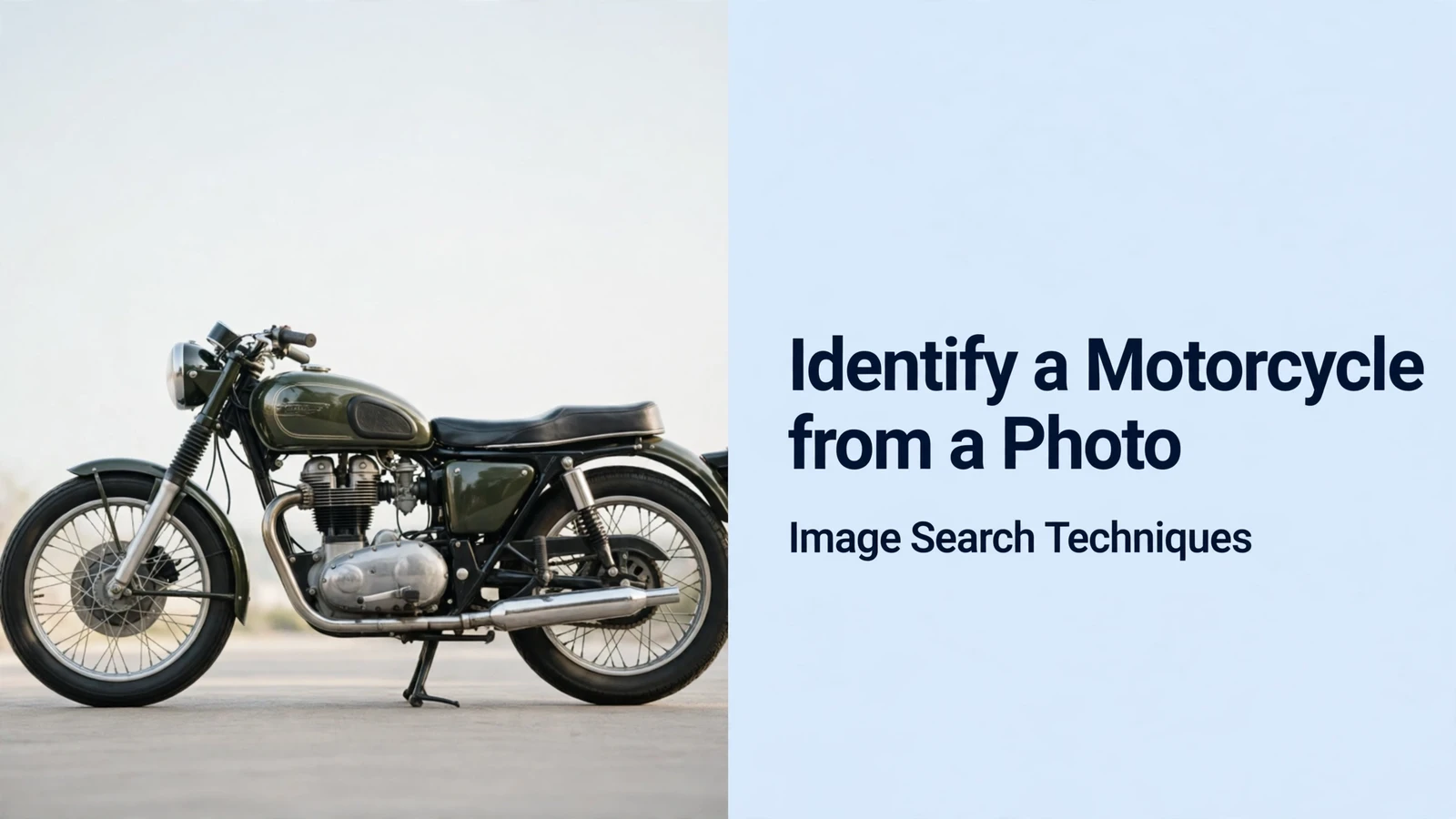
Yes, you can identify a motorcycle from a photo. Upload a clear picture of the bike to Google Lens, crop tightly around the motorcycle, and Lens will suggest matching makes and models to compare. Then check the suggestion against the bike’s badges, tank shape, headlight, exhaust and wheels before you accept it. This guide shows the exact steps, how to photograph a bike so the search works, and the checks that stop a wrong answer.
How to identify a motorcycle from a photo in five steps
Visual search matches your bike against labelled photos across the web — but only when you give it a clean image and check what it returns.
- Take a clean photo of the motorcycle. Photograph the whole bike from the side in daylight, with nothing else in the frame. A side profile shows the tank, seat, exhaust and wheels together, as most reference photos do.
- Open Google Lens and upload the photo. Use lens.google.com on a computer, or Lens in the Google app on your phone.
- Crop tightly around the bike. Drag the selection box so it covers only the motorcycle, cutting out the background, people and other vehicles — a tight crop is the single biggest factor in an accurate result.
- Read the top matches, not just the first label. Lens shows a best-guess name, visually similar images and the pages they come from. Open two or three of the top results and compare their photos with yours — if the suggested bike differs in tank shape, headlight or exhaust, the label is probably wrong.
- Cross-check with a second engine. Run the same cropped photo through Bing Visual Search: if two independent engines suggest the same make and model, you can trust it far more than a single result. Our step-by-step guide to reverse image search covers the full method, and our Google reverse image search guide explains the Lens workflow in more detail.
Photograph the motorcycle properly
Most failed identifications are photography failures — get these basics right before you search.
- Use natural daylight. Photograph the bike outdoors in open shade or on a bright overcast day. Harsh midday sun and flash hide detail and blow out chrome.
- Take the side view first. A straight side-on shot of the whole bike is the most useful single photo, showing the proportions, tank, seat line, wheels and exhaust together. Add a three-quarter front view as a second shot.
- Photograph the badges close up. Take separate close-ups of the tank badge, model names on the side panels, and the headlight, and search them on their own too — a badge close-up often returns an exact model match.
- Use a plain background. Park the bike against a plain wall or an empty road; a busy street scene gives the engine too many shapes to match.
Read the clues in the photo: badges, shape, lights and wheels
A search engine suggests a name, but you confirm it. Before accepting any result, compare the suggested bike with the clues in your own photo.
Badges and model names. The tank badge gives the make, and the name on the side panel or tail usually gives the model. Search any readable text in quotation marks too — a text search can confirm a name the image search only guessed at.
Tank shape and graphics. The fuel tank is one of the most distinctive parts of a motorcycle. Its shape, size and paint scheme, including stripes and logos, often identify a model family at a glance.
Headlight and fairing. Round, rectangular, twin or LED-strip headlights each point to different models and eras, and a full fairing changes a bike’s whole outline. A naked bike and a faired version of the same machine can share an engine yet look completely different, so note which one you have.
Exhaust and wheels. The exhaust route, silencer shape and number of pipes are hard to change without redesigning the bike, so they are reliable clues. Spoked or cast wheels and disc size also narrow the field, especially between model years.
Colour is the weakest clue. Manufacturers repaint the same model in different colours every year, and many bikes are repainted by owners. Use colour as a starting point, never as proof.
Cross-check the result before you trust it
A visual match is a lead, not a verdict. Search engines match patterns; they do not know motorcycles. A confident-looking label can still be wrong, especially when two models share a frame and engine but wear different badges and bodywork.
First, compare your photo with reference photos from an authoritative source: the manufacturer’s own model pages and owner’s club galleries. Check whether they match your bike’s tank, headlight, exhaust and wheels, not just its name. Second, search the suggested model name as text together with a detail from your bike, such as its colour or likely year, and see whether reviews and specification pages describe the same features. Third, run the photo through a second visual engine, or try our free reverse image search tool to see where else that photo appears online. Our complete guide to reverse image search explains how to weigh the results when engines disagree.
Trust the identification only when at least two independent sources agree: the search engines and a reputable reference page describing the same features. If they disagree, believe the reference page. Pay special attention to model years: the same name can cover bikes that look quite different, and a model sold for ten years may have changed its headlight, wheels, exhaust and graphics several times. The right name with the wrong year is still a wrong answer.
Common mistakes that lead to the wrong model
Most wrong identifications come from a handful of avoidable errors:
- Searching a cluttered photo. A bike in a crowded car park, behind other vehicles or beside people gives the engine too much to match. Crop to the bike alone.
- Trusting the first result. The top result is the closest visual match, not necessarily the correct model. Open several results and look for agreement.
- Confusing lookalike models. Manufacturers often sell near-identical bikes under different names, and one platform can appear as a naked bike, a sports bike and a tourer. Compare the details, not the general shape.
- Ignoring customised bikes. A bike with an aftermarket exhaust, different handlebars, a repaint or a removed fairing will not match factory photos. If it is heavily customised, search a close-up of an unmodified part, such as the engine or frame, instead of the whole bike.
- Using only one engine. Each engine indexes a different part of the web, so a bike Lens cannot name may be identified by Bing. Our guide on how to find similar images shows the same cross-checking habit.
When a photo alone is not enough
Some motorcycles cannot be identified from a photo with confidence, and it is better to know that than to accept a wrong name. Heavily customised bikes, rare or vintage machines with few photos online, and poor pictures that hide the badges and details often lack what a search needs.
If the bike might be valuable, or you need certainty before buying it or ordering parts, take the photo and the details you have to a marque specialist, an owner’s club or a reputable dealer. They can often identify a bike from a single detail, such as an engine casting, that no search engine would notice. If you own the bike, the vehicle identification number on the frame and the registration document will give you the exact model and year — but do not share that number publicly or upload it to a search engine.
FAQs
Can Google Lens identify a motorcycle from a photo?
Yes, often. Google Lens identifies common motorcycles well when the photo is clear, well-lit and cropped tightly around the bike, especially if the tank badge is visible. Rare, heavily customised or very old bikes are harder — always cross-check.
How can I identify a motorcycle model from just a picture?
Upload a clear side-on photo to Google Lens, crop tightly around the bike, and read the top matches. Then compare the suggested model’s tank, headlight, exhaust and wheels with your photo, and confirm it on a second engine or a manufacturer’s model page.
What should I do if the bike in my photo has no visible badge?
Search close-ups of the most distinctive parts instead — the headlight, exhaust, wheels and engine. Add a text search for the features you can see, such as colour and bike style, and compare with owner’s club photos of the models on your shortlist.
Can I identify a motorcycle from a photo for free?
Yes. Google Lens and Bing Visual Search are both free, and you can search from a computer or phone without an account. Photograph the bike in daylight, crop tightly around it, then cross-check the result with a second engine and a reference page.
