🔎 Reverse Image Search
Image search techniques made simple: upload a photo or paste a URL and search 6 engines at once. 100% free, nothing stored.
🔒 Your image is never stored on our servers longer than 24 hours and is never shared.
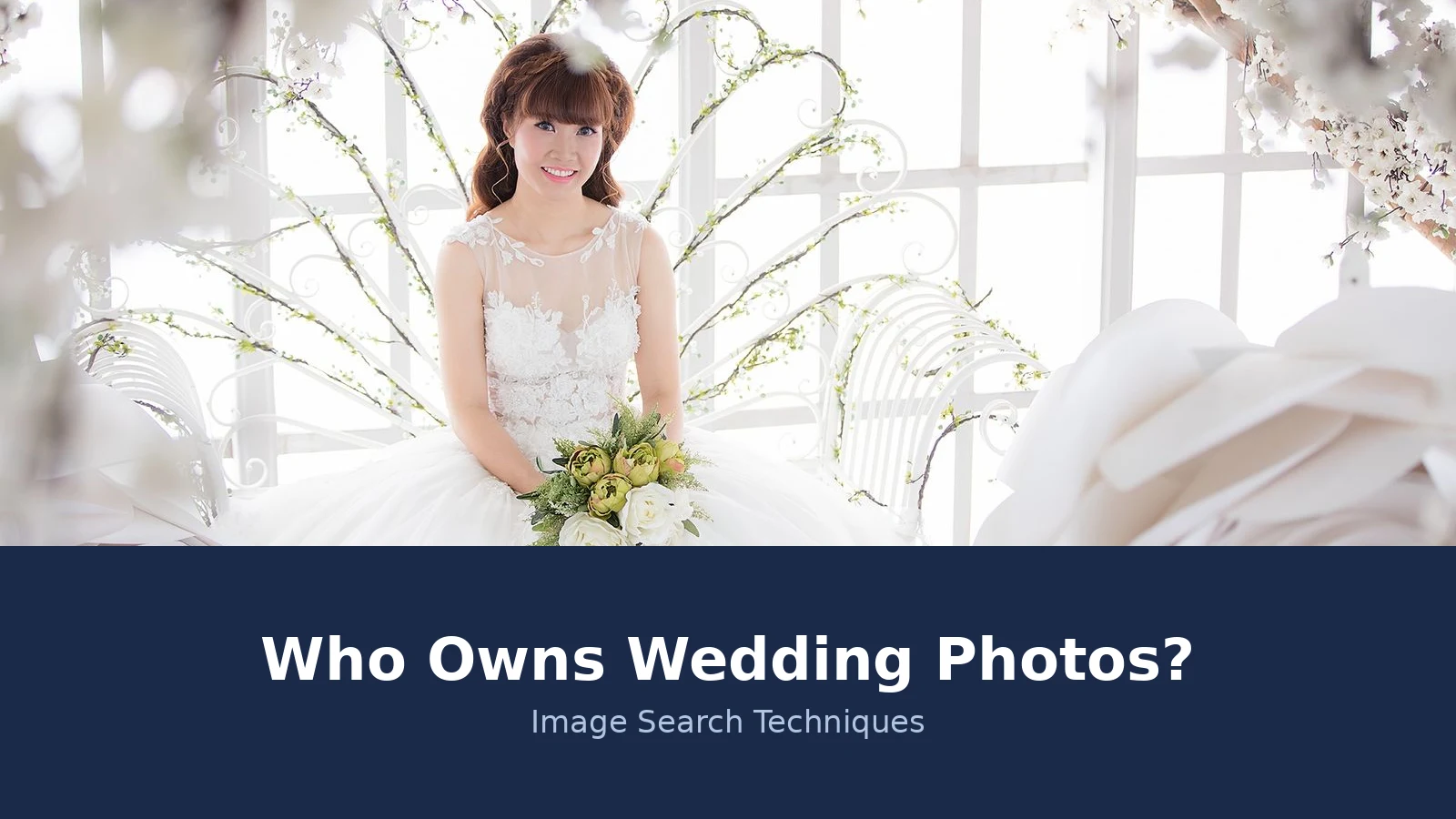
Your wedding day is over, the gallery arrives, and then the question lands: who owns wedding photos, you or the photographer? Most couples assume the answer is obvious. They paid for the shoot, so the photos must be theirs. The law says otherwise, in both the United States and the United Kingdom, and the gap between what couples expect and what the contract says is where most disputes start.
In the US and UK, the photographer owns the copyright in your wedding photos, even though you paid for the shoot. Paying buys a licence, usually to print and share the pictures for personal use, not the copyright itself. Only a signed written agreement can transfer ownership, and that is rare and usually costs extra.
That short answer surprises people, and it should be read with care. Ownership of the copyright and ownership of the pictures are two different things. You can hold the prints, keep the files on your phone, and hang a canvas on the wall, while the copyright still sits with the person who pressed the shutter. This guide explains the default rule in the US and the UK, reads a real wedding photography contract clause by clause, and maps out exactly what you can and cannot do with the photos. It is general information, not legal advice, and the contract you signed matters more than any general rule.
Who owns wedding photos by default?
Start with the person behind the camera. In the United States, the Copyright Office puts it plainly: the author and first owner of a photograph is the person who shoots it. Copyright exists from the moment the picture is fixed, which for a photographer means the moment the photo is taken. No registration, no notice and no paperwork are needed for the right to exist. The statute says the same thing. Section 201 of the Copyright Act states that copyright vests initially in the author, and it adds that owning the copyright is a different thing from owning the object the work sits on. So owning the prints, or even the memory card, does not make you the copyright owner. The US Copyright Office page for photographers sets out the rule in full.
There is one exception, and it almost never applies to a wedding. A photograph made as a work made for hire belongs to the employer or the commissioning party instead. The Copyright Office explains that this covers work made by an employee in the course of employment, or work made under an express agreement for a specific purpose the statute identifies. A freelance wedding photographer is not the couple’s employee, and a wedding shoot is not one of the purposes the statute lists, so writing “work for hire” in a contract does not hand the couple the copyright. The couple would need the photographer to be their employee, which is not how wedding photography works.
The United Kingdom reaches the same result by a different route. The Intellectual Property Office says the author or creator of a work is usually its first owner, and that when you commission someone to create a work, the first legal owner is the creator, not the commissioner, unless you agree otherwise in writing. A wedding photographer working as a freelancer keeps the copyright unless the contract says otherwise in writing. Only an employee’s work belongs first to the employer. The Copyright, Designs and Patents Act 1988 says the same in section 11: the author is the first owner, subject to the employee rule. The official guidance on ownership of copyright works sets out the commissioned-work rule and the employee rule side by side.
The same rule covers your guests. A guest who takes a photo with their own phone or camera owns the copyright in that shot, even though it was taken at your wedding. Having the file in your inbox does not transfer the right, so ask before you sell a guest’s photo or use it commercially.
There is one wrinkle worth knowing if the wedding was a long time ago. Before 1 August 1989, the UK rule was the opposite for commissioned photographs: the commissioner, not the photographer, owned the copyright. The Intellectual Property Office gives a wedding as its own example. So a wedding photographed before that date may belong to the couple, while one photographed after it belongs to the photographer. Check the date before assuming anything about old family wedding albums.
Copyright also lasts a long time, which is why the question keeps mattering years later. For a photograph taken by an individual, it runs for the photographer’s life plus 70 years. Registration is a separate step. In the US, a photographer must register before suing for infringement, and registering early unlocks statutory damages, which US law sets at $750 to $30,000 per work, rising to $150,000 where the infringement was wilful. Our guide to how to register copyright for photographs explains that process step by step.
Answer capsule: in the US and the UK, the photographer owns the copyright by default, paying does not change that, and only a signed written agreement can move ownership to the couple.
What did you actually pay for?
If you did not buy the copyright, what did the invoice cover? The short answer is the photographer’s time, skill and labour on the day, plus a licence to use the finished photos. A licence is permission to use something someone else owns. It is not ownership, and it only covers what it says it covers. That distinction is the whole dispute in one sentence.
Definition: a print release is a written permission to print your photos. It is a kind of licence. It tells a print lab that the photographer allows you to order prints, and it usually covers personal use only. It does not transfer the copyright, it does not let you sell the photos, and it does not let you hand the rights to someone else. When a photographer says “you have a print release”, they mean you can print the pictures for yourself, not that the pictures are yours.
Most wedding licences look alike. They cover printing for the home, sharing with family, and posting on the couple’s own social media, all for personal, non-commercial use. They do not cover selling prints, licensing a photo to a magazine, putting a photo on a product, or letting a venue use the pictures in its advertising. Commercial use needs explicit permission, and it is priced separately. The session fee and the usage rights are two different negotiations, and couples who treat them as one deal are the ones who get surprised.
What if there was no written contract at all? The position is weaker for everyone. In the UK, where a contract is silent, a court may find only an implied, limited, non-exclusive licence for the purpose the photos were commissioned for, not a transfer of ownership. That implied licence probably covers printing an album and sharing the photos with family, because that is what a wedding shoot is for. It does not cover selling the pictures or letting a business use them. Get the licence in writing before the wedding, not after a row.
Before you use any photo you did not take yourself, the same check applies. Our guide on how to check a photo licence before you use it runs through the questions to ask, and the first one is always who owns the copyright.
Answer capsule: you paid for the shoot and a personal-use licence, not the copyright, so check what the licence covers before you print, post or share.
What does a real wedding photography contract say?
General rules only get you so far. The contract decides what happens in practice, so this section reads one real contract line by line. The document is the Neurapix Wedding Photography Agreement, a published seven-page template, and its Section 3 is headed “Copyright and Usage Rights”. Your own contract may use different words, but most wedding contracts follow the same shape, and the shape is what matters.
Clause 3.1 states the ownership position in one sentence. All photographs taken by the photographer are the exclusive property and copyright of the photographer, who may register them with the US Copyright Office, and nothing in the agreement transfers the underlying copyrights to the client. That is the default rule from the last section, written into the contract. Paying the invoice does not move it.
Clause 3.2 then gives the couple their licence. Once all fees are paid in full, the photographer grants a perpetual, non-exclusive, non-transferable licence to use the delivered images for personal, non-commercial purposes. The clause lists printing, sharing on social media and displaying the images at home. The same clause draws the line: the client shall not sell, license, or otherwise monetise the images without the photographer’s express written permission. Note the trigger. The licence only starts once full payment is made, so an unpaid balance can mean no licence at all.
Clause 3.3 covers editing. Minor cropping or colour filters for personal social media use are allowed. Substantial alteration, editing or retouching needs the photographer’s prior written consent, and if the couple want significant retouching they must ask the photographer, for an additional fee. That is the clause behind the familiar rule that a photographer can object to heavy filters and edits on their work.
Clause 3.4 covers everyone else. Vendors and other third parties, such as wedding planners, venues and caterers, who want to use the images for commercial or promotional purposes must obtain permission directly from the photographer. The client is not authorised to grant usage rights to any third party. So the couple cannot hand their venue a photo for the venue’s website, however friendly the relationship is.
Clause 7.1 is the other side of the deal, the model release. The client grants the photographer a perpetual, non-exclusive licence to use, display, reproduce and publish the delivered images for portfolio, advertising, marketing, social media and promotional purposes, including online galleries, printed materials and exhibitions. Read with clause 3.2, the picture is symmetrical: the couple get a personal licence, the photographer keeps the copyright and a licence to promote their own business with the photos.
The table below maps the five things couples most often want to do, against what this contract actually allows. It is the quickest way to read any wedding contract: find the clause, find the verb, and check whether your plan is on the allowed side.
| What the couple want to do | What the contract says | Verdict |
|---|---|---|
| Print the photos for home, family and gifts | Clause 3.2 allows printing for personal, non-commercial purposes, once all fees are paid | Yes |
| Post the photos on social media | Clause 3.2 allows sharing on social media for personal use; clause 3.3 allows minor cropping and colour filters, and blocks substantial edits without written consent | Yes, with light edits only |
| Share the photos with vendors such as the venue or florist | Clause 3.4 says vendors must get permission directly from the photographer; the couple cannot grant usage rights to a third party | No, the vendor must ask the photographer |
| Enter a photo in a competition | Competition entry is not mentioned anywhere in the licence clause, so no permission is granted; most competitions also require the entrant to own the copyright or hold the rights | No, unless the photographer agrees in writing |
| Sell the photos, as prints, stock or to a magazine | Clause 3.2 forbids selling, licensing or otherwise monetising the images without the photographer’s express written permission | No, without express written permission |
One gap in this contract deserves attention. Competition entry is not mentioned at all. Silence does not mean permission. A licence only covers what it lists, and entering a competition is a public, often commercial use that also asks the entrant to warrant they hold the rights. A couple who enter without asking are taking a risk the contract never approved.
Answer capsule: a typical contract keeps the copyright with the photographer, gives the couple a personal-use licence after full payment, and leaves selling, vendor use and competitions outside what the couple may do.
Can you print, post, share or sell your wedding photos?
The table above is one contract. The answers below generalise it, because the same pattern repeats across most wedding contracts in the US and the UK. Check your own wording first, but this is the position you should expect.
Print them: yes, for personal use. A print release exists for this. Order prints for your home, make an album, and give prints to family as gifts. A lab may ask to see the print release before printing, which is normal. The lab is protecting itself, because printing a photo without the copyright holder’s permission can make the lab liable too. Keep the release with the files so you can show it when asked.
Post them on social media: yes, for personal use. Post the photos on your own accounts, tag the photographer, and share them with family. That is what a personal-use licence is for. Two limits apply. First, keep edits light. Heavy filters, crops that cut out a watermark, or re-edits that change the look of the photo can breach the contract, and the photographer can object. Second, do not post them on a business account or use them to promote a business. That is commercial use, and it needs separate permission.
Share them with vendors: you can show them, you cannot licence them. Sending a photo to your florist so they can see their work is not the same as giving the florist permission to use the photo in an advert. The first is personal sharing. The second is a licence, and only the copyright holder can grant it. If your venue wants a photo for its website, the venue must ask the photographer. Some photographers say yes for free, some charge, and some say no, but the decision is theirs.
Enter them in a competition: usually no. Competitions ask the entrant to confirm they own the copyright or hold the rights to enter. A couple with a personal-use licence cannot honestly give that confirmation. Ask the photographer first. Some will agree, especially for a named competition, and will put the permission in writing. Without that, do not enter.
Sell them: no, without written permission. Selling is the clearest commercial use there is. It covers selling prints, licensing a photo to a magazine or stock library, and putting a photo on a product. Your personal-use licence does not include it. If a magazine approaches you about a photo, the answer is to put them in touch with the photographer, not to agree a fee yourself. The photographer owns the right to sell, so the photographer sets the price.
Answer capsule: print and post for personal use, show vendors the photos but do not licence them, and ask in writing before entering a competition or selling anything.
Who owns the RAW files, and can the photographer post your photos?
Two questions sit underneath the ownership question, and both catch couples out. The first is the RAW files. The second is the photographer’s own use of the pictures.
The couple do not own the RAW files. RAW files are the unprocessed data straight from the camera, and they are the photographer’s working files, not part of what a wedding package delivers. A standard package delivers finished, edited JPEGs, usually through an online gallery. Nothing in a typical contract hands over the RAW files, and most photographers will not supply them at any price, because the RAW file is where their editing style lives and because an unedited file can be finished badly by someone else and then attributed to them. If RAW files matter to you, ask before booking, expect a fee or a refusal, and get the answer in writing. Do not assume they are included because you paid for the shoot.
The photographer posting your photos is the other half of the deal. Most wedding contracts include a model release that lets the photographer use the delivered images for a portfolio, on social media and in advertising. That is the photographer’s side of the licence: you get a personal licence, they keep a promotional one. It is also the part couples read least and regret most, usually when a photo appears on the photographer’s Instagram or website.
In the UK, couples have one extra protection that is easy to miss. Section 85 of the Copyright, Designs and Patents Act 1988 gives a privacy right over photographs commissioned for private and domestic purposes, and it stops the photographer from issuing copies to the public, exhibiting them in public, or communicating them to the public, unless the contract licensed that use. A public Instagram post, a portfolio website and a Facebook business page all count. Our guide on what to do when a photographer posted your wedding photos online explains the section 85 position in full, including the practical ladder: read the contract, reverse-image-search two or three photos to find every copy, send a polite written section 85 request with a 14-day deadline, and only then escalate.
The contract decides how strong that request is. With no portfolio clause, the request is at its strongest. With a signed portfolio clause covering the use in question, the clause usually defeats it for that use. A crossed-out or narrowed clause is evidence of what was actually agreed. If the photographer refuses to take photos down, our guide on what happens when a photographer refuses to delete your photos sets out the next steps. The wider question of keeping your pictures safe online is covered in our complete guide to protecting your photos online, which brings the ownership, posting and removal rules together in one place.
Answer capsule: the RAW files stay with the photographer, portfolio use is usually licensed in the contract, and in the UK section 85 gives couples a privacy right against public posting where no portfolio use was licensed.
How can you get full ownership if you want it?
Some couples want the copyright itself, not a licence. That is possible, but it has to be arranged before the wedding, in writing, and it will cost more. The steps below are the practical route.
- Ask before you book, not after the wedding. Ownership is a term of the contract, and it is far easier to negotiate when the photographer still wants the booking. Once the photos are taken, the photographer holds every card.
- Ask for a written assignment of copyright, signed by the photographer. A transfer must be in writing and signed. A verbal promise, an email saying “sure, they are yours”, or a line in a brochure is not enough to move ownership. Get the assignment as a clause in the contract itself.
- Expect to pay significantly more. A photographer who gives up the copyright gives up future income from the photos: portfolio use, publication, licensing and prints. The fee reflects that. Treat it as a separate negotiation from the session fee, because that is what it is.
- Check exactly what the assignment covers. Does it cover every photo taken, or only the delivered edits? Does it include the RAW files? Does it cover photos the photographer has already published? An assignment that covers only the delivered JPEGs still leaves the photographer holding the RAW files and any unpublished frames.
- If full ownership is too dear, negotiate the licence instead. Ask for a wider licence in writing: commercial use for a named purpose, permission to enter competitions, or the right to let vendors use named photos. A wider licence is cheaper than an assignment and covers most of what couples actually want.
- Keep the paperwork with the photos. File the signed contract, the assignment or licence, and the print release with the gallery link and the backup drive. Years later, when a lab asks for proof or a magazine approaches you, that file is the answer.
One warning applies to the whole negotiation. Do not write “work for hire” in the contract and assume the job is done. As the first section explains, a wedding shoot does not fit the work-for-hire categories, so the label changes nothing. What changes ownership is a signed written assignment, and nothing else.
Answer capsule: ask before booking, get a signed written assignment, expect to pay more, check whether it covers the RAW files, and keep the paperwork with the photos.
FAQs
Do I own the rights to my wedding photos?
Usually not. In the US and UK the photographer owns the copyright, even though you paid for the shoot. What you normally receive is a personal-use licence to print, share and post the photos for yourself. Ownership changes only if a signed written agreement transfers it, which is rare. Read your contract before assuming you hold the rights.
Can a photographer use my wedding photos without my permission?
Often, yes, if the contract allows it. Most wedding contracts include a model release that lets the photographer use the photos for a portfolio, on social media and in advertising. In the UK, section 85 gives couples some protection against public posting of photos commissioned for private and domestic purposes, unless the contract licensed that use.
Can I ask a photographer not to post my photos?
Yes, and the best time to ask is before you book. Ask for the portfolio clause to be removed or narrowed, and get the change in writing. If the photos are already online, a polite written request works best, and in the UK a section 85 request carries weight where no portfolio use was licensed.
Do photographers own the rights to photos they take?
Yes, in general. The photographer is the author of each photo and owns the copyright from the moment the shutter fires, in the US and the UK. Hiring the photographer does not change that, and neither does paying the invoice. The exception is work made by an employee in the course of employment, where the employer owns the copyright first.
Can I sell my wedding photos?
Not without the photographer’s written permission. Selling is a commercial use, and the copyright holder controls it. That covers selling prints, licensing a photo to a magazine, or putting one on a product. Your personal-use licence does not include selling. If you want to sell a photo, ask the photographer first and agree the terms in writing.
What is a print release, and is it the same as owning the photos?
A print release is a written permission to print the photos, usually for personal use. It is a licence, not ownership. It lets you order prints at a lab and share the pictures at home, but the photographer keeps the copyright and can still use the images. Ownership would need a signed written transfer of the copyright itself.