🔎 Reverse Image Search
Image search techniques made simple: upload a photo or paste a URL and search 6 engines at once. 100% free, nothing stored.
🔒 Your image is never stored on our servers longer than 24 hours and is never shared.
Short answer: the photographer usually owns the copyright in photos he took, even when you are the person in them. You cannot force deletion on copyright grounds alone. But the contract, data protection law, harassment law, or the commercial use of your face may give you a route. Which one applies depends on what was agreed and where the photos are used.
You asked the photographer to delete your photos. He said no. If the photo was taken moments ago by a stranger, rather than by a photographer you hired, our guide to a stranger taking photos of your family covers the in-the-moment steps first. That is the moment behind the search “photographer refuses to delete photos of me”, and it feels like the end of the road, but it is usually the start of a longer process with several separate routes. The photographer owns the copyright in most cases, and that fact alone does not settle the question.
Whether the photographer was allowed to take the photo in the first place is a separate question from deletion, and our guide to photographing people in public explains when permission is needed and when it is not.
If the photos are intimate, do not work through this guide in order. Go straight to our StopNCII and Take It Down guide first. Intimate images have their own removal routes, and speed matters more than the copyright question. This article is general information, not legal advice. Where a route involves a lawyer or the police, it says so.
What if the photographer refuses to delete photos of me?
A photo of you is not your photo. That is the sentence most people in this situation have to hear first, because everything else follows from it. Under UK copyright law, protection is automatic the moment a photographer creates an original photograph, and the creator holds the copyright. The GOV.UK copyright page states that copyright stops others from copying a work, distributing copies of it, or putting it on the internet without permission. The person who can stop those things is the copyright holder, and for a photo that is normally the person who pressed the shutter.
Being the subject of a photo gives you no copyright in it. That is true in the UK and in the US, and it is true whether you paid for the shoot or not. Paying a photographer buys you the shoot and whatever the agreement says you get, usually a set of images for personal use. It does not transfer the copyright. GOV.UK explains that selling or transferring copyright needs a written and signed document, sometimes called an assignment. If you never signed one, and the photographer never signed one giving you the copyright, the copyright stayed with him.
There is one common exception. If the photographer took the photos as an employee, as part of his job for an employer, the employer may own the copyright instead. That changes who you write to, not whether you own the images. You still do not.
So the copyright answer is usually bad news. But copyright is only one of the laws that touch a photo of a person. A photo that shows your face is also personal data about you, and the way it is used can break other rules entirely. The rest of this guide maps those routes. The competitor article on this topic, written by an Australian photographer, gets the copyright point right but stops there. It is written for models, under Australian law, and it offers no UK or US routes, no escalation ladder, and no way to find where your photos actually are. That is the gap this guide fills.
A model release is the document that matters most here. It is a short written agreement, signed before or at the shoot, that says what the photographer may do with photos of you: where they can be published, whether they can be sold, whether they can be used in advertising, and whether you can withdraw consent later. If you signed one, read it before you do anything else. If you did not sign one, that absence is itself the point, and the next section explains why.
Which route actually applies to your situation?
No single law covers every refusal. The right route depends on four facts: whether anything was agreed in writing, where the photos are being used, whether money is being made from them, and whether the use is causing you alarm or distress. Work through this table and find the row that matches your situation. That row is your starting point, not the whole answer.
| Situation | Route that may apply | What it can do | What it cannot do |
|---|---|---|---|
| You signed a model release or contract | The contract itself | Enforce the limits you agreed, including approval, no commercial use, or a takedown clause | It cannot rewrite terms you actually agreed to |
| No contract, photos used commercially | Right of publicity (US) or consumer and privacy routes (UK) | Challenge advertising use of your face without consent; in California the statute allows at least $750 or actual damages plus profits | It does not cover editorial or portfolio use in most cases |
| Photos held or published by a business | UK GDPR right to erasure | Ask the organisation to delete personal data about you; it must respond within one calendar month | It does not apply to a private individual acting outside a business, and artistic use can be an exemption |
| Repeated posting or messaging after you asked him to stop | Protection from Harassment Act 1997 (UK) | A course of conduct on at least two occasions can be harassment, which is a criminal offence | One single post, on its own, is not a course of conduct |
| Photos used to imply you endorse a product | Consumer protection and defamation routes | Challenge a false endorsement or a use that damages your reputation | It needs the implication to be clear, not just your dislike of the photo |
| Intimate photos, with or without consent to take them | StopNCII, the TAKE IT DOWN Act (US), and UK criminal law | Fast platform removal; in the US platforms must act within 48 hours of a valid request | It does not cover ordinary clothed portraits |
Two rows deserve a closer look, because they are the ones people misunderstand most. The first is data protection. Under UK data protection law, a photo that identifies you is personal data about you. The Information Commissioner’s Office explains that you can ask an organisation that holds data about you to delete it, a right also called the right to erasure or the right to be forgotten. It applies when you gave consent and have now withdrawn it, when the organisation no longer needs the data, when your objection outweighs its interests, or when the data was collected unlawfully. The organisation has one calendar month to respond, and it can take up to two more months for a complex request, but it must tell you within the first month if it needs the extra time.
There are limits, and they matter. The ICO lists exemptions, including where keeping the data is necessary for freedom of expression and information, which covers journalism and artistic purposes. A photographer running a genuine portfolio may argue that exemption. A photographer selling your face in an advert will find it harder. The right also applies to organisations, not to a private individual acting in a purely personal capacity, so it is strongest against a studio, an agency, or a business account. If the organisation refuses, the ICO says you should complain to the organisation first and then complain to the ICO. You can also go to court, but the ICO advises getting independent legal advice first.
The second misunderstood row is harassment. In England and Wales, the Protection from Harassment Act 1997 says a person must not pursue a course of conduct which amounts to harassment of another. The Act defines a course of conduct as conduct on at least two occasions against the same person, and harassment includes causing alarm or distress. A photographer who posts your photos, then posts more after you have asked him to stop, then messages you about them, is building exactly that pattern. One photo posted once is not a course of conduct. A refusal followed by repeated use can be. If you feel unsafe, talk to the police before you send any further messages yourself.
The US side is different in shape but similar in effect. There is no single federal image right. Instead, many states have their own right of publicity laws. California’s is the best known: Civil Code section 3344 makes it unlawful to knowingly use another person’s photograph or likeness for advertising or selling products or services without prior consent. A person who wins under that section recovers the greater of $750 or the actual damages suffered, plus any profits from the unauthorised use. The statute does not cover use in news, public affairs, or sports reporting. Other states have their own versions, with different limits, so the state where the photos are being used matters as much as the state where you live.
What is the escalation ladder when the photographer says no?
Start low and get firmer step by step. Each step creates a record, and the record is what makes the next step work. Do not start with threats. A calm written request resolves more of these disputes than any legal letter, because many photographers simply have not thought about it from your side.
- Save evidence first. Screenshot every place the photos appear, showing the image, the page address, the account name, and the date. Save your messages with the photographer, including the original agreement to shoot and his refusal. Do this before you ask for anything, because posts can disappear once a dispute starts, and a deleted post is much harder to prove.
- Find where the photos actually are. Reverse search one of the photos before you write anything. Our face search and photo privacy guide explains how to search for photos of yourself online. A photographer who says he will only keep the photos on his own site may already have them on a stock library, a portfolio site, or a client’s page. The worked example below shows how to do this and what the results mean.
- Ask in writing, and be specific. Name the exact photos, say where they are, and say what you want: deletion, removal from a specific site, or no further use. Give a date by which you expect a reply, two weeks is reasonable. Keep the tone calm and keep a copy. If you agreed anything verbally, write it down in the same message so there is a record of what was said.
- Point to the term he is breaking, if there is one. If you signed a release, quote the clause. If the use goes beyond what was agreed, say so plainly. If the photos are being used in advertising and you never agreed to that, say so. A photographer who knows you have read the paperwork takes the request more seriously.
- Use the data protection route in writing. If a business holds your photos, send a right to erasure request. The ICO publishes a template letter for this, and its guidance says you do not need special wording, but a written request with your full name, what you want erased, and a request for a reply within one calendar month is the cleanest form. Keep proof of sending.
- Report the photos where they are posted. Platforms have their own reporting tools for privacy, harassment, and non-consensual images. Our photo of you removal guide walks through the platform routes step by step, so this article does not repeat them. Use that guide for the reporting steps, and use this article for the photographer himself.
- Get advice before you pay for a lawyer’s letter. A solicitor’s letter is the next rung, and it works best when the earlier steps are documented. Community legal centres and legal aid services can advise at low or no cost, and many solicitors offer a short first consultation. Do not pay for a letter until someone qualified has looked at your contract, if you have one, and told you which route is strongest.
- Complain to the regulator or the police where the facts fit. A refused erasure request goes to the ICO. Repeated unwanted contact goes to the police as possible harassment. Intimate images go through StopNCII and the police. Each of these needs the evidence you saved in step one.
One warning about the ladder: never pay the photographer to delete your own photos unless a solicitor has told you that is the sensible settlement in your case. Paying for deletion can be read as an agreement that he was entitled to keep them, and it does not stop copies that are already elsewhere.
Worked example: a 2009 shoot photo, still online in 2026
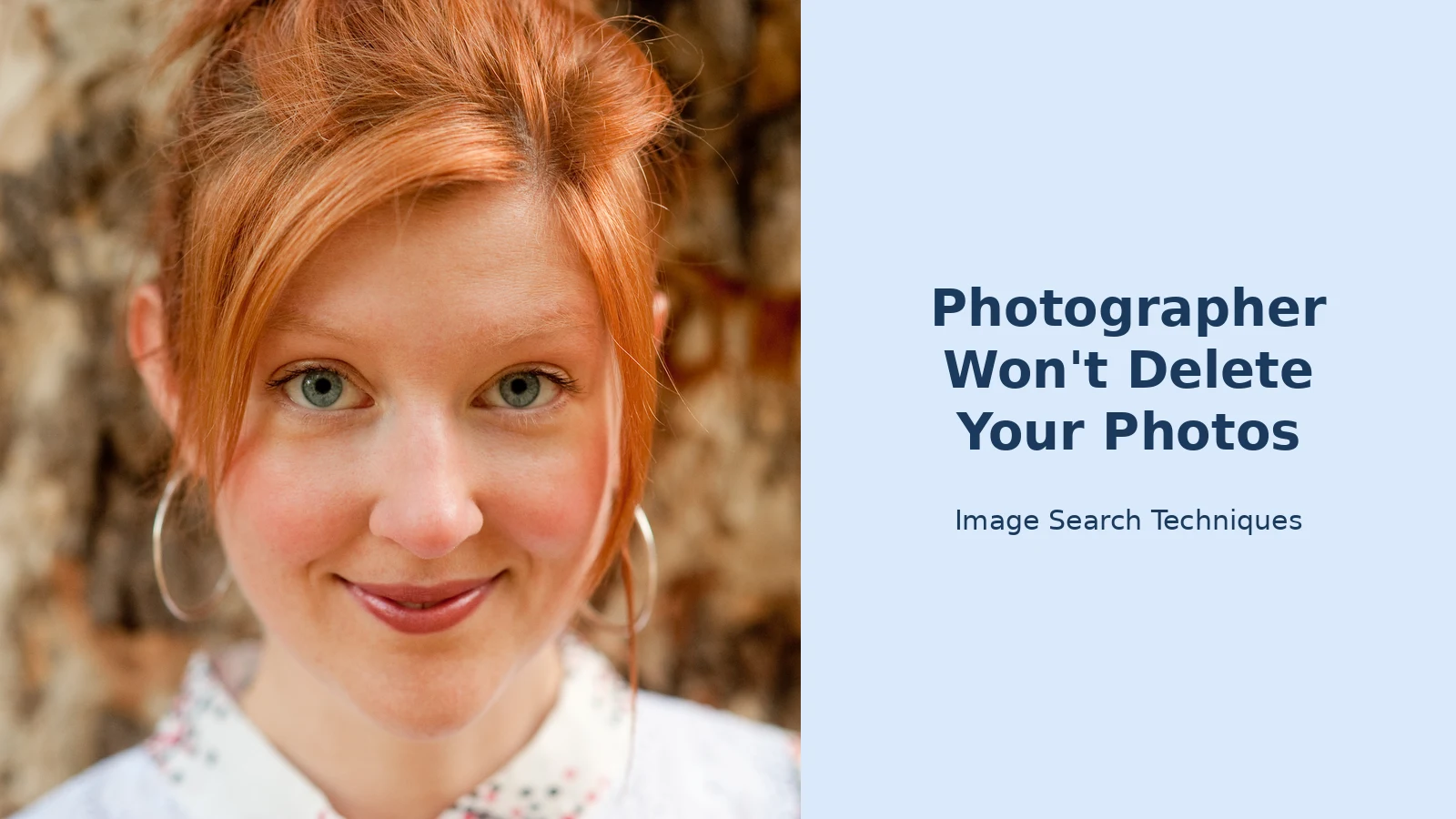
To see what a refusal really means in practice, we took a real photoshoot portrait and traced where it lives today. The photo shows Robin Hunicke, a game designer, at a photoshoot for the studio thatgamecompany in August 2009. It was taken by Charlie Chu and is published on Wikimedia Commons under a CC BY-SA 2.0 licence. It is an ordinary, fully clothed portrait from a professional shoot, the kind of image a photographer might keep in a portfolio for years. That is exactly why it is a useful test: it shows how far a shoot photo can travel once it leaves the photographer’s hands.
We reverse searched the original file on 15 November 2026, using Google Lens and TinEye, and recorded what each tool found. TinEye reported 130 results across 86.7 billion images, first indexed on 22 June 2012. The earliest copy it found sits on experimental-gameplay.org, dated 22 June 2012, a small 336 by 240 copy of the portrait. From there the trail runs through uxweek.com in September 2012, the Independent Games Festival jury pages in early 2013, and then a wave of copies dated 13 February 2013, when the photo became Wikipedia’s picture of the day and was reused across Wikipedia language editions and picture-of-the-day templates. Commons itself groups 47 matches under its own pages, and getinmedia.com groups another 23. The original Flickr page where the photographer first posted it, dated 21 June 2013, is also in the results. In short, a single portrait from a 2009 shoot now sits on at least 130 pages, most of them copies the subject never agreed to individually.
Google Lens could not be run the same day. Google’s unusual-traffic page blocked the search twice, and after the security check was passed the results page asked for a Google sign-in, which we do not do. That is a failed search, not a zero: it tells us nothing about where the photo appears. The TinEye result alone is enough for the point, though. One reverse search found 130 copies of one portrait. That is the scale of the problem a refusal creates.
Read those results the way a subject should read them. A match count is a list of places, not a verdict. If the photo appears on a dozen sites, your deletion request has a dozen destinations, and asking the photographer alone will not reach them. If a tool finds nothing, that proves nothing either: a photo can be live on a site neither tool has indexed yet, or cropped, or re-uploaded under a different file name. The point of the search is practical. Before you write to the photographer, you need to know whether the photos are sitting in one place or scattered. A refusal to delete matters far more in the second case, because every copy needs its own request.
The second part of this example is a real case, published by the UK firm Cohen Davis, about a former model whose story shows how the routes in the table above work in sequence. The firm calls her Jasmina, and it notes on its own page that names, dates and circumstances were changed to protect her identity. Jasmina was 18 when she took part in a semi-naked photoshoot arranged through a modelling agency. Years later, as an adult, she wanted the images gone. She tried the search engines first, submitting right to be forgotten applications to Google and Bing. Bing agreed immediately and delisted the links. Google refused at first, arguing that she had willingly taken part in the shoot and that the images were a matter of public interest. After a lengthy process and a great deal of persuasion, Google relented and agreed to delist the images, accepting that on balance her right to privacy was paramount.
Three lessons sit inside that case. First, the same request can get a different answer from two different companies, so a refusal from one is not the end. Second, the argument that matters is not “I was in the photo” but “my privacy now outweighs the public interest in keeping it searchable”, and that argument gets stronger as time passes and the context changes. Third, the process took a long time and needed professional help. If your photos are intimate, or if a search engine has already refused you, that is the point to get advice rather than to keep writing letters yourself.
What will not work
Several ideas sound like they should work and do not. Knowing them in advance saves weeks.
“It is my face, so I own the photo.” No. Copyright belongs to the photographer in the usual case, and your face does not change that. Your routes are the contract, data protection, harassment, and commercial-use law, not copyright.
“I paid for the shoot, so the photos are mine.” No. Payment buys the service and the agreed deliverables. Copyright transfers only by a signed written assignment, and most shoots never include one. If you paid and received nothing in writing, check what the booking messages actually promised.
“If I get it deleted from Instagram, it is gone.” No. Deletion from one platform removes one copy. The worked example above shows how a single shoot photo can sit on many sites at once. Every copy needs its own request, which is why the reverse search comes before the letter.
“I will report him to the police and they will make him delete it.” Not for an ordinary portrait. The police deal with harassment, stalking, and intimate images. A photographer keeping portfolio photos he owns the copyright in is not a police matter on its own, even if you hate the photos.
“A threatening first message will make him move faster.” Usually the opposite. A first message that accuses him of breaking the law, when he has not, makes him defensive and makes him keep records of your messages. A specific, calm, written request with a deadline is stronger, and it leaves you looking reasonable if the matter goes further.
“I can use copyright to take down a photo of me that someone else took.” No, and this is the mistake that wastes the most time. A takedown notice under copyright law belongs to the copyright holder. If you send one for a photo you do not own, the platform can ignore it, and the photographer can send a counter-notice. Use the privacy and platform routes in our removal guide instead.
How do you stop this happening at your next shoot?
The cheapest fix for this problem happens before the shutter clicks. A short written agreement, even in an email, changes everything. The competitor article makes this point well, and it is worth repeating here because it is the one part of the problem you can fully control.
Before any shoot, agree in writing: who owns the photos, where they may be published, whether they may be sold or licensed, whether they may be used in advertising, whether they may be used to train AI tools, and what happens if you ask for them to be taken down later. If the photographer will not put any of that in writing, treat that as information. A professional who is happy to be clear about usage before the shoot is far less likely to refuse a deletion request after it.
Ask specifically about AI. Photos of real people are now routinely fed into training sets and editing tools, and a release written five years ago says nothing about it. Our guide to opting your photos out of AI training explains which platforms offer an opt-out and how to use it. If your photos are already in a training set, removal is much harder than removal from a website, which is another reason to agree the point before the shoot.
Keep your own copy of everything: the messages agreeing the shoot, the release, the gallery link, and the photographer’s full name and business details. If the shoot is arranged through an agency, tell the agency what was agreed. Agencies have their own reasons to keep photographers honest, and a dispute that reaches an agency is often resolved faster than one that stays between two individuals.
Finally, remember the wedding parallel. A photographer who posts wedding photos against the couple’s wishes is the same problem in a different setting, and our guide on a photographer posting wedding photos online covers the contract and portfolio angles for that case. The principles are the same: the contract decides most of it, the platform routes handle where the photos sit, and the law is the last resort, not the first step.
The ownership question behind all of this has its own guide. Our guide to who owns wedding photos explains why paying for the shoot buys a licence, not the copyright, and what a real contract allows a couple to do with the photos.
If you are the person in the photos, start with evidence, then a written request, then the route that matches your facts. If the photos are intimate, start with StopNCII and the police, not with a letter. And if a photographer has already refused you in writing, keep that refusal. It is the single most useful document you own, because it proves you asked, and it proves he said no.
FAQs
Can I make a photographer delete photos of me?
Not on copyright grounds, because the photographer usually owns the copyright. You may still have a route through the contract or model release, UK data protection law, harassment law, or the commercial use of your face. Which route works depends on what was agreed, where the photos are used, and whether money is being made from them.
Does paying for a photoshoot mean I own the photos?
No. Paying buys the shoot and whatever the agreement says you receive, usually images for personal use. Copyright stays with the photographer unless it is transferred by a signed written document, called an assignment. If no assignment was signed, the photographer still owns the copyright even though you paid for the session.
Can I use GDPR to get my photos deleted?
You can ask an organisation that holds photos of you to erase them under the UK GDPR right to erasure, also called the right to be forgotten. It has one calendar month to respond. It can refuse where keeping the photos is necessary for freedom of expression, including genuine artistic use. If it refuses, complain to the ICO.
What if the photographer uses my photo to advertise his business?
Commercial use without your consent is the strongest route in many cases. In California, Civil Code section 3344 makes knowingly using a person’s photograph for advertising without prior consent unlawful, with damages of at least $750 or actual damages plus profits. In the UK, a false endorsement can raise consumer protection and defamation issues. Get advice before claiming damages.
What if the photos are intimate?
Intimate photos have their own fast routes. In the US, the TAKE IT DOWN Act requires platforms to remove intimate images within 48 hours of a valid request, and StopNCII can hash the image so it is blocked across platforms. In England and Wales, sharing a non-consensual intimate image is a criminal offence. Report it to the police as well.
How long does a deletion request take?
A polite written request to the photographer can be answered in days, and many photographers agree quickly. A formal data protection request must be answered within one calendar month, with up to two extra months for complex cases. Search engine delisting can take weeks or months, and a refusal can be appealed. Keep copies of everything you send, with dates.