🔎 Reverse Image Search
Image search techniques made simple: upload a photo or paste a URL and search 6 engines at once. 100% free, nothing stored.
🔒 Your image is never stored on our servers longer than 24 hours and is never shared.
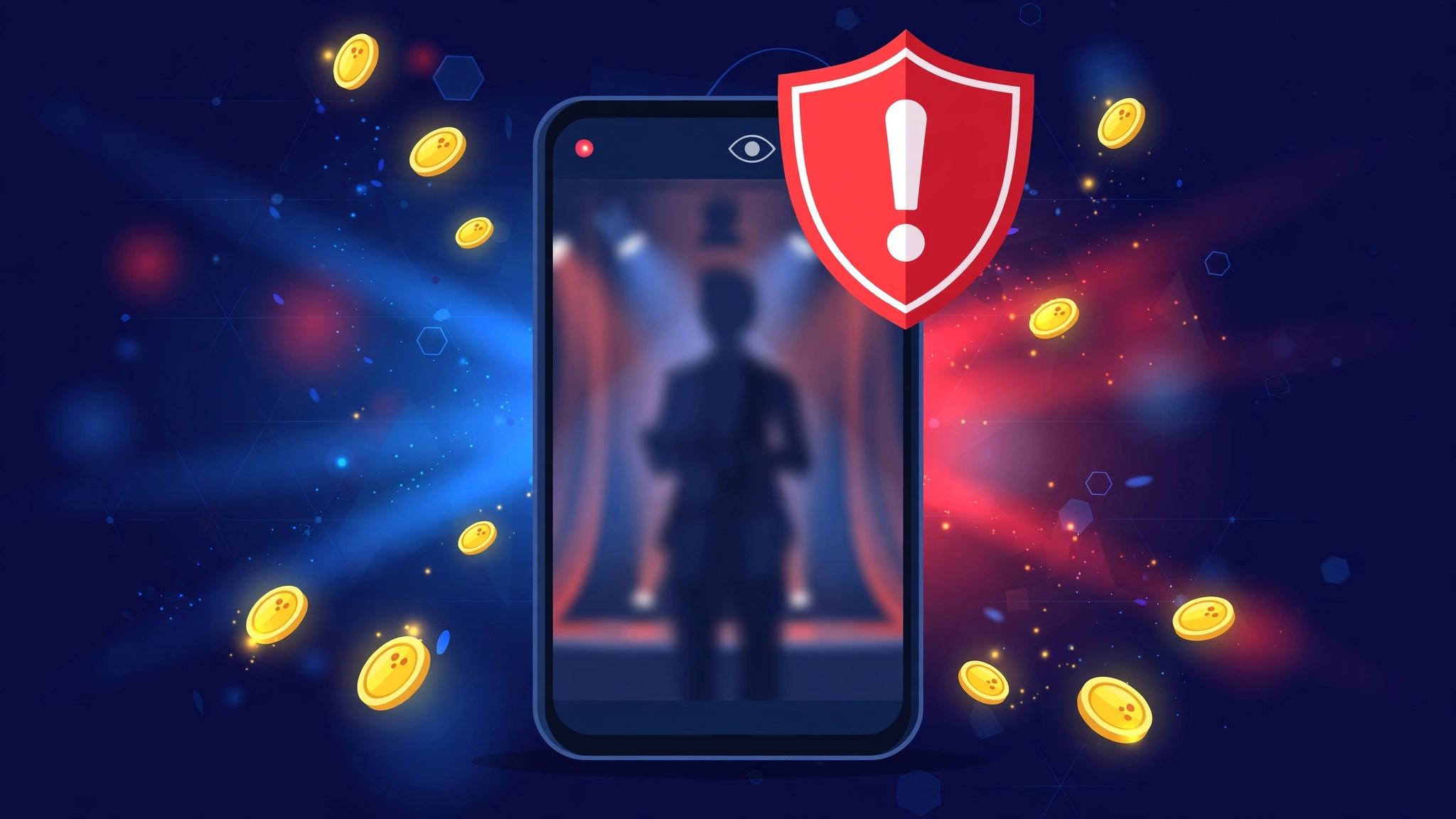
You are watching what looks like a Tesla event on YouTube. Elon Musk is on stage, and he has a surprise for viewers: send some cryptocurrency to the address on the screen, and he will send back twice as much. A QR code sits in the corner, ready to scan. The chat is moving fast, the offer is about to expire, and the man on screen looks and sounds exactly like Musk. None of it is real. The livestream is fake, the Musk on screen is an AI deepfake, and the wallet addresses belong to scammers. That is what happened in October 2026, when a fake Tesla livestream drew more than 500,000 viewers and hundreds of them tried to send money. Coinbase said on 17 November that its defences stopped about $4.7 million, roughly 91 percent. This guide explains how the scam worked, why it fooled so many people, and how to check any celebrity livestream before you send a coin.
Short answer
No, Elon Musk is not giving away free cryptocurrency. The livestream that promised to double your crypto was a fake, built around an AI-generated Musk, a copied Tesla event and wallet addresses controlled by scammers. Coinbase says hundreds of its customers tried to send money during the roughly two-hour broadcast, and its automated defences blocked about $4.7 million, around 91 percent. Estimates put the amount that still reached the scammers near $460,000. The one rule that would have stopped every loss is simple: never send crypto to an address shown in a video or livestream, no matter who appears to be asking.
What happened: a fake Tesla livestream with a deepfake Musk
The scam was timed to a real Tesla event. In October 2026, Tesla demonstrated a flying car, and scammers built a YouTube livestream designed to look like the official broadcast. The stream featured an AI-generated version of Elon Musk, speaking to the camera, alongside wallet addresses and a QR code on screen. The promise was simple: send cryptocurrency to the address shown and get twice as much back. More than 500,000 people watched it.
Coinbase disclosed the incident in a blog post on Tuesday 17 November 2026. Hundreds of its customers tried to send money over roughly two hours. Its AI-powered system had flagged the payments in real time, looking for giveaway patterns, brand impersonation and new wallets. When a transfer was flagged, an AI agent talked the customer through how the trick works. Coinbase says the system stopped about $4.7 million, roughly 91 percent of the attempted transfers, with no human intervention. Malwarebytes Labs covered the same incident on 19 November: a giveaway that asks you to send crypto first is always a scam.
Using Musk’s image for this kind of fraud is not new; fake Musk giveaways have run for years as short videos or posts. What is new is the scale. A two-hour livestream with a moving, talking Musk is far harder to dismiss than a single blurry image, and the scammers had perfect timing, riding the genuine interest in a real Tesla event.
How the scam worked, step by step
The same playbook is reused with different faces and different coins. Here is how this one ran.
Step 1: hijack a real event. The scammers did not invent an occasion. They waited for a real Tesla demonstration people were already searching for, then copied its look: the stage, the branding, the broadcast. Anyone searching YouTube for the event could land on the fake stream instead of the real one.
Step 2: put a deepfake on screen. The Musk in the stream was generated with AI, built from the countless photos and videos of him already online. Scammers need only a photo or a short clip of a public figure to build a convincing fake, and Musk is one of the most photographed people on earth.
Step 3: show the payment details. Wallet addresses and a QR code stayed on screen throughout the broadcast. That is the whole point of the stream: point your phone, confirm, done. There is no website to inspect and no link to check, just an address that looks official because it sits next to a famous face.
Step 4: add urgency and social proof. The offer was framed as limited and the chat moved fast, making it feel like everyone else had already decided it is safe. Some of that chat may have been bots, but a real viewer has no way to tell.
Step 5: collect the money. Viewers who sent crypto sent it to wallets the scammers controlled. Crypto payments are typically irreversible, so once a transfer goes through there is no bank to call and no chargeback to file. Customers tried to send about $5.2 million in total, and even with 91 percent blocked, estimates suggest around $460,000 still got through.
Why half a million people believed it
It is easy to call the victims careless. That misses the point, and it is also unfair. This scam worked because it stacked several kinds of trust at once, and each one is hard to question in the moment.
First, the face was familiar. Musk really does run Tesla, and he really does talk about cryptocurrency in public. A giveaway from him does not sound impossible to someone who has seen him tweet about crypto before. The deepfake only had to be good enough, not perfect, because viewers were watching a live event, half listening, while the chat scrolled past.
Second, the setting was real. The flying car demonstration genuinely happened, and the stream looked like the broadcast of it. When the event is real, the brain fills in the rest: if the event is real, the stream must be real too. That is the same shortcut that makes a fake screenshot of a real news story so convincing.
Third, the numbers looked like proof. More than 500,000 viewers is a crowd, and crowds feel safe. In reality, a viewer count can be inflated and a chat can be faked. Only hundreds tried to send money, but it was enough to move millions of dollars.
Finally, crypto is fast and final. There is no cooling off period and no fraud department to reverse it. By the time a victim realises the giveaway was fake, the money is gone. That is why the check has to happen before you press send, not after.
How to check any celebrity livestream before you send money
You do not need to become an expert in spotting AI to stay safe. You only need a short routine, run before money moves. These seven checks take about two minutes, and any one of them would have exposed this scam.
1. Check the channel, not the video. Open the channel that is streaming. Is it the verified official channel, with the grey tick and a long history? Or a new or renamed channel whose other videos have nothing to do with Tesla? Scammers often take over an old channel and rename it.
2. Check the official source directly. Close the stream and go to the company’s own website or verified social media account yourself. If Tesla or Musk were really giving away crypto, it would be announced there. Never use a link supplied by the promotion itself.
3. Screenshot a frame and reverse image search it. Pause the stream on a clear shot of the speaker’s face, take a screenshot, and run it through a reverse image search. If the same face appears in older videos or press photos from a different event, you are looking at reused footage or a generated overlay. A genuine live event will also turn up real news coverage, while a fake stream turns up nothing except itself. Our image search techniques guide walks through the free tools.
4. Look for the deepfake tells. Watch the face for thirty seconds without listening to the words. Does the mouth match the speech exactly, or does it lag on certain sounds? Do the eyes blink naturally? AI video still struggles with hands, teeth and the edges of the face, so look at those too. One odd detail proves nothing, but three or more together are a strong signal. Our guide to the best deepfake video detector tools shows free tools that can check a clip, and the same method works on a suspicious deepfake video call.
5. Treat the QR code as the warning, not the proof. A QR code on screen is not evidence that an offer is legitimate. It is just a fast way to move money to an address you have never seen. Coinbase warns against sending funds to addresses displayed in videos or livestreams. If an offer needs you to scan a code before you have time to think, that urgency is part of the scam.
6. Search the exact promise. Copy the wording of the giveaway, for example “Elon Musk double your crypto”, and search it with the word “scam”. These scams are reported quickly, and a search will usually surface warnings or earlier versions of the same trick. This is the same habit that exposes a fake crypto giveaway screenshot and the fake profile photos scammers use to promote them.
7. Ask the giveaway question. Would a billionaire really double your money if you send it to him first? No legitimate business, celebrity or exchange has ever run a giveaway that works that way. The “send first, get more back” structure is the giveaway scam in its purest form, and it appears in almost every photo scam that involves money.
The same skills exposed the viral 4D cinema AI videos yesterday: pausing, screenshotting, searching and looking for the tells.
What to do if you already sent crypto
Crypto payments typically cannot be reversed, so there is no guarantee of recovery. But do not blame yourself, and do not stay silent. Act quickly to limit further losses.
First, preserve the evidence. Keep transaction records, receipts, screenshots of the stream and the wallet address. Then contact the exchange you used immediately and report the scam. In the US, report it to the Federal Trade Commission through ReportFraud.ftc.gov. If the exchange stopped the payment, as Coinbase did for most of its customers here, you may only need to confirm that the transfer was blocked.
Second, stop communicating with the scammers. Fake giveaways often demand extra payments to supposedly release the first transfer, and a second payment never brings the first one back. If someone offers to recover the money for a fee, that is a second scam. Our guide to the crypto recovery scam explains how it works.
Third, check your accounts. If you shared personal details, change your passwords and turn on two-factor authentication. Remember that the same face that fooled you can be reused to fool others: if a scammer has your photo, they can build a fake of you. Our guide on how to remove a deepfake of yourself covers what to do then.
The lesson is not that AI video is unbeatable. It is that the payment request is the tell. If a livestream asks you to send crypto to an address on screen, the offer is a scam, whoever appears to be making it. Check the channel, check the official source, and never send money to a stranger on a screen.
Frequently asked questions
Was the Elon Musk Tesla livestream crypto giveaway real?
No. The livestream was a fake built around an AI-generated Elon Musk, timed to a real Tesla flying-car demonstration in October 2026. The wallet addresses and QR code on screen belonged to scammers, and the promise to double any crypto sent was false.
How much money did the fake Elon Musk livestream almost steal?
Coinbase says hundreds of its customers tried to send cryptocurrency during the roughly two-hour broadcast, attempting about $5.2 million in total. Its automated defences blocked about $4.7 million, around 91 percent. Estimates suggest around $460,000 still reached the scammers.
How can I tell if a celebrity crypto livestream is fake?
Check the channel first: a real event streams from the verified official channel, not a new or renamed one. Then check the company’s own website or verified account. Screenshot a clear frame and reverse image search it, look for deepfake tells such as mismatched lip movement, and search the exact giveaway wording with the word scam.
Do real celebrities ever give away crypto in livestreams?
No. No legitimate celebrity, company or exchange has ever run a giveaway that asks you to send crypto first and promises to send back more. The send first, get more back structure is the giveaway scam in its purest form. Any livestream, video or post that uses it is a scam.