🔎 Reverse Image Search
Image search techniques made simple: upload a photo or paste a URL and search 6 engines at once. 100% free, nothing stored.
🔒 Your image is never stored on our servers longer than 24 hours and is never shared.
Old photos are everywhere online, and most of them look free for the taking. A black and white portrait from 1915, a government archive shot from the 1930s, a street scene somebody uploaded to a free photo site. They all sit one right click away, and it is tempting to assume that age alone makes a photo free to use. It does not, and that assumption is where people get into trouble.
This guide answers a question readers keep asking on Quora about public domain photos: “How do you know when something is no longer copyrighted?” The question covers every kind of creative work, so this article narrows it to photographs, which is where most people meet the problem in practice.
A photo is in the public domain when its copyright has expired or it never had one. In the United States that usually means it was published before 1931, its maker died over 70 years ago, or a federal employee took it on duty. In the United Kingdom it usually means the photographer died over 70 years ago.
That short answer covers most cases. The rest of this guide shows you how to check a specific photo, because the exceptions are common enough to matter. You will learn the US and UK rules, the difference between public domain and merely free to download, three real photos checked step by step, and the places where you can find public domain photos with confidence.
This article is general information about how copyright expiry works. It is not legal advice, and for a photo that carries real commercial risk it is worth speaking to a solicitor or attorney who works in this area.
What does public domain actually mean for a photo?
A photo is in the public domain when nobody owns the copyright in it any more, or when it never had copyright protection in the first place. The US Copyright Office puts it plainly: a work is in the public domain if it is no longer under copyright protection or if it failed to meet the requirements for copyright protection. Once a photo reaches that state, anyone can copy it, print it, crop it, put it on a product or use it in a video without asking permission and without paying a fee.
That freedom covers book illustrations too. A public-domain diagram from an old book can go straight into a video, which is why our guide on book images in a YouTube video uses a Gray’s Anatomy plate as its worked example, checked live with a reverse image search.
Three routes can put a photo in the public domain. The first is time. Copyright does not last forever, and when the term runs out the photo belongs to everyone. The second is the type of maker. Photos taken by employees of the United States federal government as part of their job never had US copyright protection at all. The third is a deliberate gift. A photographer can dedicate a photo to the public domain, usually through a CC0 dedication, which is a legal tool for giving up copyright as far as the law allows.
One point trips people up again and again. Public domain is a legal status, not a quality of the file. A photo does not become public domain because it is old looking, because it has no watermark, because it is on a free photo site, or because nobody has complained about its use so far. The status comes from dates, makers and the law of the country where you want to use it. That is why the check matters more than the hunch.
How can you tell if a photo is public domain?
Work through these five checks in order. You only need one of them to come back as a clear yes, but if none of them does, treat the photo as still protected. The table below is the decision checklist for this guide. Keep it beside you while you check a photo, and keep a note of which row gave you your answer.
| Check | What to look for | Where to check it | What a pass looks like |
|---|---|---|---|
| 1. Who took it, and when did they die? | The photographer’s name and death date. | The source page, the archive record, or a biography. | The photographer died over 70 years ago (US and UK rule for most photos). |
| 2. When and where was it first published? | The first publication date and country. | The archive record, the book or newspaper it appeared in, or a library catalogue. | Published in the US before 1931, which puts it in the US public domain. |
| 3. Was it made by a government employee? | Whether the photographer worked for the US federal government on duty. | The Library of Congress record or the agency that holds it. | A US federal work, which has no US copyright under 17 U.S.C. section 105. |
| 4. Does the source page state a licence? | A clear public domain mark, a CC0 dedication, or a licence statement. | The page you found it on, or the archive entry. | A clear statement from a source you trust, not a vague “free” label. |
| 5. Can you trace it back to its earliest source? | Earlier copies of the same photo and what they say about it. | Reverse image search the photo and open the oldest credible result. | The earliest source agrees with the later ones on the date and the maker. |
| 6. Is the owner unknown even after a proper search? | A photo with no named owner that a diligent search cannot trace. | The archive record, the source page, and the UK Intellectual Property Office orphan works register. | In the UK, a licence from the Intellectual Property Office. In the US there is no equivalent scheme, so the photo stays copyrighted. |
Check five is the one most people skip, and it is often the one that saves them. A photo can be labelled public domain on one site and carry a different story on the page it was copied from. Running it through a reverse image search shows you the older copies, and the oldest credible copy usually has the most reliable information about where the photo came from. If the copies disagree with each other about the date or the photographer, that is a warning sign, not a detail to ignore.
Orphan works deserve a word of their own, because they are the case where every other check comes back empty. A photo is an orphan work when it is still in copyright but its owner cannot be found, even after a proper search. Our guide to can I use a photo if you cannot find the owner runs a full diligent search on a real 1904 photograph and explains the UK orphan works licence. In the UK, the Intellectual Property Office runs an Orphan Works Licensing Scheme: you show your diligent search, pay an application fee, and the office can grant a licence to use the photo for up to seven years. The United States has no equivalent scheme, so an orphan photo found there stays copyrighted unless another rule in this checklist clears it. Never treat “owner unknown” as “free to use”. That mistake is exactly how infringement claims start.
Two habits make the whole process safer. First, write down your answer and your evidence before you publish the photo: the source URL, the date you checked, the photographer, and which rule you relied on. Second, if you cannot find the photographer or the publication date after a genuine search, do not fill the gap with a guess. An unknown author is not the same as no author, and a photo with no provenance is the riskiest kind to use.
What are the US rules for public domain photos?
The United States has the most written down rules of any country, and the US Copyright Office explains them in Circular 15A on the duration of copyright, which was revised in April 2026. Four rules cover almost every photo you will meet.
Published before 1931. All works published in the United States before 1 January 1931 are in the public domain. The date moves forward by one year every 1 January, because the term for these works is 95 years from publication. So a photo published in 1931 enters the public domain on 1 January 2027, and the same pattern continues year by year.
Life plus 70 years. For photos created on or after 1 January 1978, copyright lasts for the photographer’s lifetime plus 70 years. If the photographer is unknown, or the photo was made for hire by a company, the term is 95 years from first publication or 120 years from creation, whichever ends first. This is the rule that catches people who assume a photo from the 1960s must be free by now. If the photographer died in 1980, the photo stays protected until the end of 2050.
The renewal gap, 1923 to 1963. Photos published in the US between 1923 and 1963 had to have their copyright renewed in their 28th year to stay protected. Many were never renewed, often because the owner had moved on or the photo had little commercial value, and those photos are in the public domain. Photos published from 1964 to 1977 had their copyright renewed automatically, so they stay protected for 95 years from publication. Checking whether a photo from this period was renewed is a real step, not a formality, and the Copyright Office keeps renewal records you can search.
Federal government works. Under 17 U.S.C. section 105, copyright protection is not available for a work of the United States Government, which the law defines as a work prepared by a federal officer or employee as part of their official duties. Photos taken by federal employees on duty are therefore in the public domain in the United States. Three limits apply. The rule covers federal work only, so photos made by state or local governments can still be protected. Work made for the government by outside contractors can also be protected, because the contractor is not a government employee. And the US government can still hold copyright in its works outside the United States, so the same photo may be free to use in the US and protected elsewhere.
One more US wrinkle is worth knowing about. Under the Uruguay Round Agreements Act, some foreign works that had lost US protection because of missed formalities had their copyright restored on 1 January 1996. So a foreign photo that looks public domain in the US because it was never registered or renewed may still be protected. If the photo comes from outside the US, check its home country rules too.
What are the UK rules for public domain photos?
The UK rules are simpler on the surface, and GOV.UK sets them out in its guide to how long copyright lasts. For most photographs, which the law treats as artistic works, copyright lasts for the photographer’s lifetime plus 70 years. A photo by a photographer who died in 1950 entered the public domain at the end of 2020. A photo by a photographer who died in 1980 stays protected until the end of 2050.
Where the photographer is unknown, the term is 70 years from the end of the year in which the photo was made, or 70 years from the end of the year it was first made available to the public if that happened during the first 70 years. This matters for old family photos and archive material where nobody recorded the photographer’s name. The clock runs from the photo itself, not from a person you cannot identify.
Crown copyright is a separate case. Photos made by the Crown, which covers government departments and the armed forces, are protected for 125 years from creation, or for 50 years from commercial publication if the photo was published within 75 years of being made. For a practical check on a real GOV.UK photo, see our guide to whether you can use government photos for free, which works through the Open Government Licence step by step. So a British government photo from the First World War is safely public domain, while a Ministry of Defence photo from the 1990s is not.
One UK trap deserves a line of its own. Unpublished works made before 1 August 1989 can stay protected until 31 December 2039 under the transitional rules, even if the photographer died more than 70 years ago. This is the rule that surprises people who find an old unpublished print in an attic or an archive and assume the age alone settles it. If the photo was never published, check this date before you rely on the life plus 70 rule.
The UK and US rules can give different answers for the same photo, because copyright expiry is decided country by country. A photo can be public domain in the US and still protected in the UK, or the other way round. If you publish on a website, you are effectively publishing in both countries at once, so the safe approach is to check both sets of rules and only proceed when the photo is clear under each one that applies to your audience.
What is the difference between public domain and “free to use”?
This is the distinction that causes the most mistakes, and it is also the gap in the AI Overview that Google shows for this topic. The Overview lists good places to find photos, but it mixes true public domain with CC0 licences and open use licences as if they were the same thing. They are not, and the difference matters when you rely on the photo. Google Images is where most bloggers first meet these labels, so if your question starts there, our guide to can I use images from Google on my blog works through the licence check step by step.
| Label you may see | What it actually means | Do you need to credit anyone? |
|---|---|---|
| Public domain | No copyright owner. You can use it for any purpose, including commercial use, without permission. | No, though crediting the source is good practice. |
| CC0 (public domain dedication) | The creator has given up copyright as far as the law allows. Works like public domain in practice. | No, though credit is appreciated. |
| CC BY | Free to use, including commercially, but only if you credit the creator. | Yes, and link the licence. |
| CC BY-SA | Free to use with credit, but anything you make from it must carry the same licence. | Yes, and share your version alike. |
| CC BY-NC | Free for personal use only. Commercial use needs permission. | Yes, and no commercial use. |
| Royalty free | You pay once, then use it under the licence terms. It is not free and not public domain. | Follow the licence terms. |
| “Free download” | Means nothing on its own. It only says the file costs nothing to fetch. | Check the licence before you use it. |
CC0 deserves a closer look, because it is the closest thing to public domain that a living photographer can offer. When a photographer applies a CC0 dedication, they give up their copyright and related rights as far as the law in their country allows. The Met’s Open Access programme works this way: over 492,000 images of public domain artworks are released under CC0, which is why the museum can promise free use without a permission step. A CC0 photo behaves like a public domain photo for almost every practical purpose, but the legal route is different, and in a few countries a full waiver of copyright is not possible, so the dedication falls back to a broad licence instead.
The labels that cause the most trouble are the vague ones. “Free download” tells you nothing about the licence. “Free for personal use” is not free for a blog that runs adverts. “Free with credit” is usually a CC BY licence, which is fine, but only if you actually give the credit. And a photo on a free stock site can still be a copyrighted photo that the site is allowed to distribute under its own terms. Always read the licence line on the page itself, not the marketing around it.
There is one more habit worth building. When you find a photo you want to use, check whether the page says who took it and when. A page that names the photographer, gives a date, and states a licence is a page you can rely on. A page that says nothing at all is a page that asks you to take its word for it, and that is not enough when your name goes on the published result.
If the photo is not in the public domain, the next step is to check the photo’s licence before you use it, with a four step checklist that works from the source page.
Worked example: three real photos checked step by step
Theory is easy to read and easy to forget, so here are three real photos run through the checklist above. Each one was checked on 15 November 2026 against the live records, and the verdicts are stated with the evidence behind them.
Photo one: Migrant Mother, 1936, Dorothea Lange
This is one of the most reproduced photographs in the world. It shows Florence Owens Thompson with two of her children at a pea pickers camp in Nipomo, California, in March 1936. Dorothea Lange took it while working for the Farm Security Administration, a US federal agency, and the Library of Congress holds the negative.
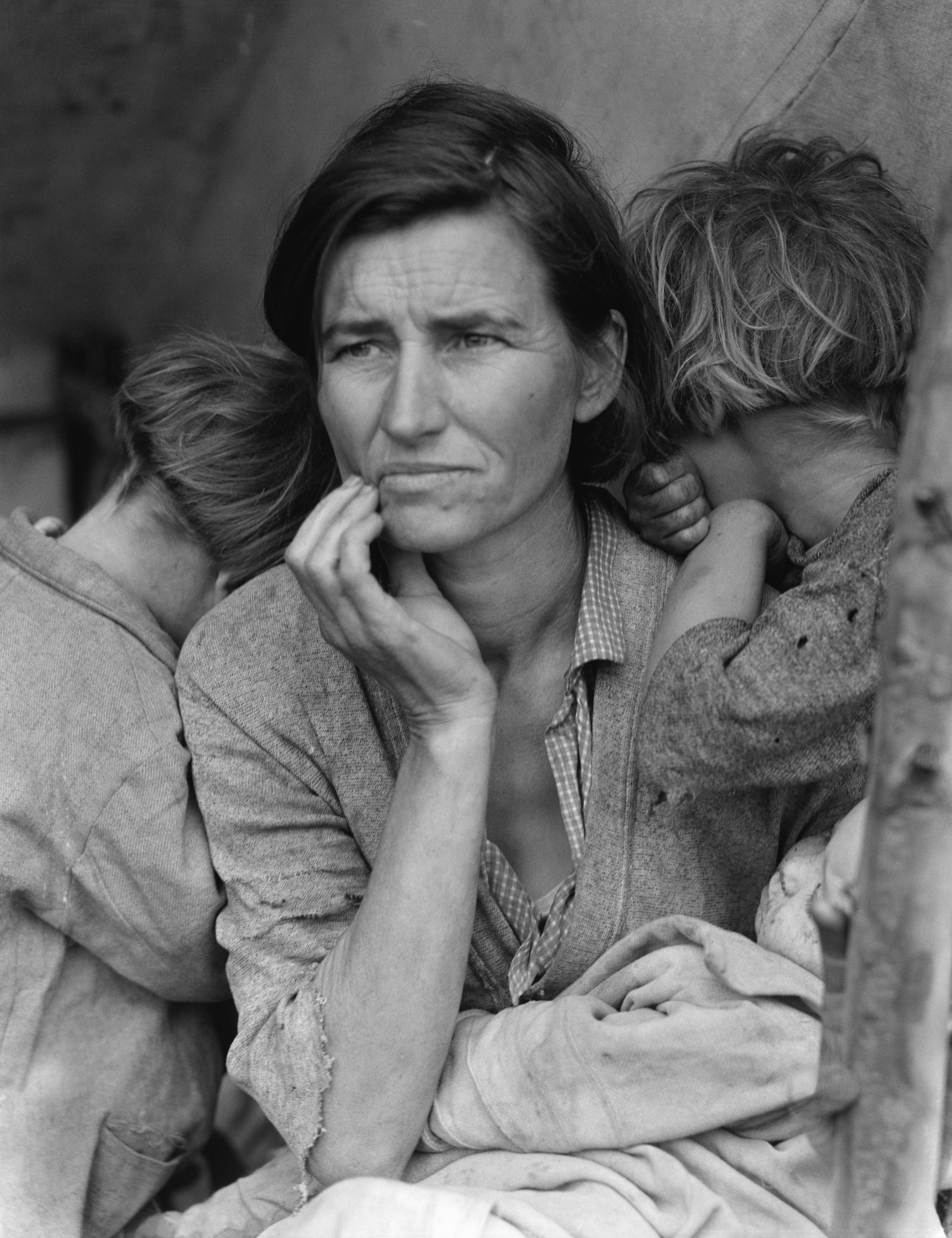
Running the checklist: check one, the photographer. Lange died in 1965, so the life plus 70 rule would keep the photo protected until the end of 2035. Check two, publication date. It was published in 1936, which is after 1931, so the date rule does not clear it either. Check three settles it. Lange was a federal employee taking the photo as part of her official duties, so under 17 U.S.C. section 105 the photo has no US copyright protection. The Wikimedia Commons file page records exactly this, listing it as a public domain US federal government work. Verdict: public domain in the United States, and safe to use there.
One caution still applies. The photo shows a real, identifiable person. Public domain status is about copyright, not about the subject. Using this photo in an advert or on a product could raise separate issues about the person’s likeness, so the safe uses are editorial, educational and illustrative, which is how the photo is normally used.
Photo two: Charlie Chaplin as the Tramp, 1915
This portrait shows Chaplin in character as the Little Tramp, bowler hat and cane, in 1915. The photographer is listed as P. D. Jankens, and the image is a well known studio portrait from Chaplin’s early film career.
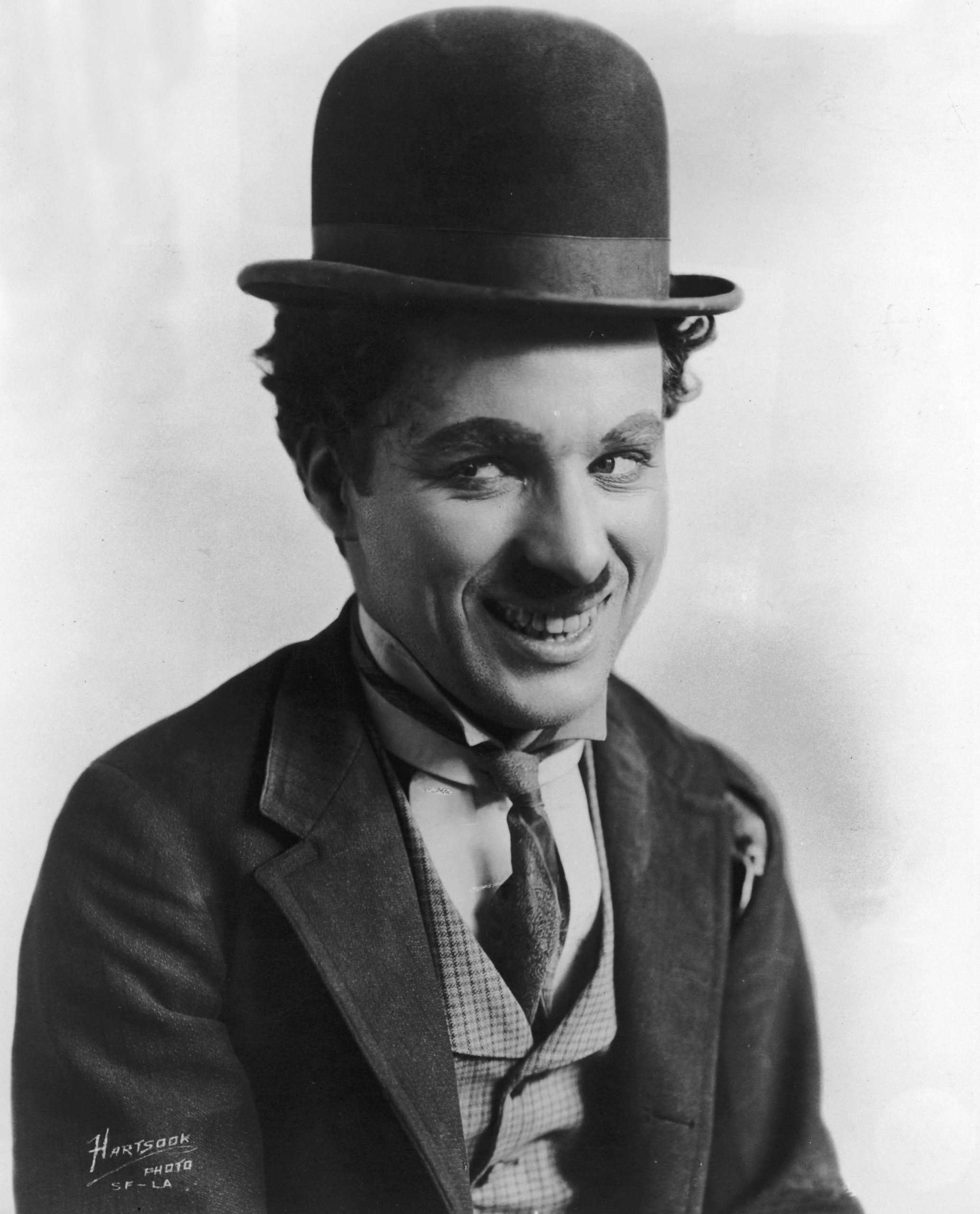
Running the checklist: check two does the work here. The portrait was published in the United States in 1915, well before the 1931 cut off, so it is in the public domain in the US under the 95 year rule. The Wikimedia Commons file page records it as public domain for exactly this reason. Verdict: public domain in the United States, and safe to use there.
Again, there is a second layer to watch. The Chaplin estate’s company, Bubbles Inc, owns trademark and publicity rights in Chaplin’s name, likeness and the Little Tramp character, and it licenses the image for merchandise. So the photo itself is free to reproduce, but putting the Tramp on a mug or a T-shirt to sell could still draw a trademark complaint. Copyright and trademark are different rights, and one expiring does not cancel the other. For a blog post or a history article, the photo is fine. For a product, get advice first.
Photo three: a London pub, March 2024, Mike Peel
The third photo is a modern one: The Volunteer public house on Baker Street in London, photographed on 24 March 2024 by Mike Peel and shared on Wikimedia Commons. It looks ordinary, and that is the point. It is exactly the kind of photo people find on Commons and assume must be public domain because it is free to view. The same photo is worked through licence by licence in our guide to using Wikipedia images on your blog.
Running the checklist: check one, the photographer is alive and working, so the life plus 70 rule does not clear it. Check two, it was published in 2024, so the date rule does not clear it. Check four settles it the other way. The file page states the licence clearly: CC BY-SA 4.0. That means the photo is free to use, including commercially, but only if you credit Mike Peel and only if anything you make from it carries the same licence. Verdict: not public domain. Free to use with credit and share alike, and a breach of either condition is a breach of the licence.
These three photos show the pattern to look for. The two public domain photos each have a clear, named reason: a federal work, and a pre 1931 publication. The modern photo has a clear licence that is generous but conditional. In each case the answer was written on the source page, in the file record, and confirmed by a reverse image search that showed the same photo with the same details on the earliest credible copy.
Where can you find public domain photos?
Google’s AI Overview for this topic lists the best known sources, and they are all worth using. Each one is described here in our own words, with the honest limits the Overview leaves out.
The Metropolitan Museum of Art Open Access. The Met has released over 492,000 images of public domain artworks under CC0, free to download and use without permission. This is the largest single museum source, and the quality is high, but most of it is artwork and objects rather than photographs, so it suits illustration more than documentary use.
National Gallery of Art, Washington. The Gallery offers free downloadable open access art datasets and high resolution files with no usage fees. Like the Met, it is strongest on paintings and works on paper, and the images are clean, well documented scans.
The Getty Museum. Getty has released thousands of public domain artworks under CC0, and its own posts put the downloadable public domain image count at 88,000. Check the licence line on each image, because Getty also holds material that is not public domain.
Library of Congress, Free to Use and Reuse. This is the best source for American historical photographs. The Library offers over 100 curated free to use and reuse sets, each holding 25 to 50 historical items, covering photographs, maps, posters and films. The records usually name the photographer and the date, which makes the checklist easy to run.
The Public Domain Review Image Archive. A hand picked collection of out of copyright works, organised by artist, century and style, with 11,373 works listed on its own site. It is curated rather than exhaustive, which makes it a good place to browse when you want something unusual.
PICRYL. A large search and similarity engine for public domain historical images and documents, which describes its collection as 35 million plus free public domain images and photos. It aggregates material from many archives, so treat each result on its own merits and check the source it came from.
Free Images. A stock style library holding millions of public domain and CC0 photos, vector art and illustrations. The mix of true public domain and CC0 is fine in practice, but read the licence on the image you pick, because the site carries both.
Unsplash public domain collection. Unsplash has a public domain collection of curated community photos, but read this one carefully. Unsplash photos are shared under the Unsplash Licence, which is a broad free use licence, not a public domain dedication. For most uses the practical result is the same, but if you need true public domain status for legal reasons, Unsplash is not the source to rely on.
Two sources of your own are worth adding to that list. The first is your national library or archive, which often holds local material the big American collections do not. The second is a reverse image search of any photo you are unsure about, which shows you where else it appears and often leads you back to the archive that holds the original.
What can still go wrong with a public domain photo?
Public domain means no copyright owner. It does not mean no rules at all, and four separate issues can still cause trouble.
People in the photo. A photo can be public domain and still show a recognisable living person. Using that person’s face in an advert, on packaging, or in a way that suggests they endorse your product can raise privacy and publicity claims that have nothing to do with copyright. Editorial and educational use is normally fine. Commercial endorsement use is where the risk sits.
Trademarks and characters. The Chaplin example above shows this clearly. A photo can be free of copyright while the character, logo or brand in it is still protected as a trademark. The same applies to famous cartoon characters, sports team crests and brand logos that appear in old photographs. Trademarks can last indefinitely as long as they are used and renewed, so they do not expire the way copyright does.
Moral rights outside the US. In the UK and much of Europe, a photographer keeps moral rights even after the economic copyright has been dealt with, and in some countries moral rights last as long as copyright itself. For a public domain photo this rarely bites, but it is one reason to credit the photographer where you know who they are, even when the law no longer requires it.
For the full method, our guide to how to credit a photo properly shows how to build a credit line for a public domain photo, a Creative Commons photo and a stock photo, with the TASL method and the mistakes to avoid.
Wrong labels and restored copyright. Not every photo labelled public domain is one. Some sites apply the label loosely, some copy a label from another site without checking, and some photos had their US copyright restored in 1996 under the Uruguay Round Agreements Act. A label is a claim, not proof. Run the checklist, and if the label and the dates disagree, trust the dates.
If you do get a demand about a photo you believed was public domain, do not ignore it and do not pay it on the spot either. Keep the letter, keep your evidence of the check you ran, and read our guide to suing for photo theft through the small claims track, which explains how photo claims are handled in the UK and what to do first. The evidence you kept is what turns a dispute into a short conversation.
How do you record your check before you publish?
Five minutes of notes now can save a difficult argument later. Follow these steps for every photo you plan to use, and keep the note with the file.
- Save the source URL where you found the photo, and the date you checked it.
- Write down the photographer, the publication date, and the country of first publication.
- Write down which rule you relied on: pre 1931 publication, life plus 70, federal work, or CC0.
- Save a screenshot of the licence line or the archive record that states the status.
- Run the photo through a reverse image search and save the oldest credible result as a second source.
- If the photo shows a recognisable person or a trademark, note how you plan to use it and whether that use is editorial or commercial.
- Keep the note in the same folder as the photo, so anyone working on the piece later can see the reasoning.
For photos you make yourself with AI tools, the rules are different again, and our guide to AI image copyright explains who owns AI generated pictures in the US and the UK. For checking whether a photo file carries provenance data that supports your research, our guide to checking Content Credentials shows what the file itself can tell you. And for the wider question of keeping your own photos out of other people’s searches, start with our complete guide to protecting your photos online. Flickr photos are a different case from public domain photos: see can I use Flickr photos commercially, which explains the six Creative Commons licences and why a Flickr download is not automatically free to use.
Is every old photo in the public domain?
No. Age alone does not make a photo public domain. In the United States a photo published before 1931 is public domain, and in the UK a photo is public domain 70 years after the photographer dies. A photo from the 1960s by a photographer who died in 1990 stays protected until 2060, so check the date and the maker.
Can I use a public domain photo on a commercial website?
Yes, if the photo is genuinely public domain you can use it commercially without permission or payment. The caution is about other rights in the image. A recognisable person, a trademark or a famous character in the photo can still cause problems, so keep commercial use editorial in style or get advice first.
Does free to download mean a photo is public domain?
No. Free to download only says the file costs nothing to fetch. The photo may still be fully protected by copyright, or shared under a licence such as CC BY that needs credit. Always read the licence line on the page itself, and treat a photo with no licence statement as protected until you prove otherwise.
Is a photo on Wikimedia Commons always public domain?
No. Wikimedia Commons hosts public domain photos, CC0 dedications and Creative Commons licensed photos side by side. Each file page states its licence, and many modern photos there are CC BY-SA, which needs credit and share alike terms. Read the licence section on the file page before you use any photo from Commons.
Can I sell prints of a public domain photo?
Yes. Selling prints of a genuinely public domain photo is allowed, because nobody owns the copyright. Two limits apply. You cannot claim copyright in the unaltered photo itself, and if the photo shows a trademark, a famous character or a recognisable person, selling it as merchandise can raise separate legal issues worth checking first.
What if I get a demand letter for a photo I thought was public domain?
Do not ignore the letter and do not pay it straight away. Keep it, gather the evidence of the check you ran, including the source page, the dates and the rule you relied on, and get advice before you reply. A clear paper trail showing a genuine public domain check often resolves the matter quickly.