🔎 Reverse Image Search
Image search techniques made simple: upload a photo or paste a URL and search 6 engines at once. 100% free, nothing stored.
🔒 Your image is never stored on our servers longer than 24 hours and is never shared.
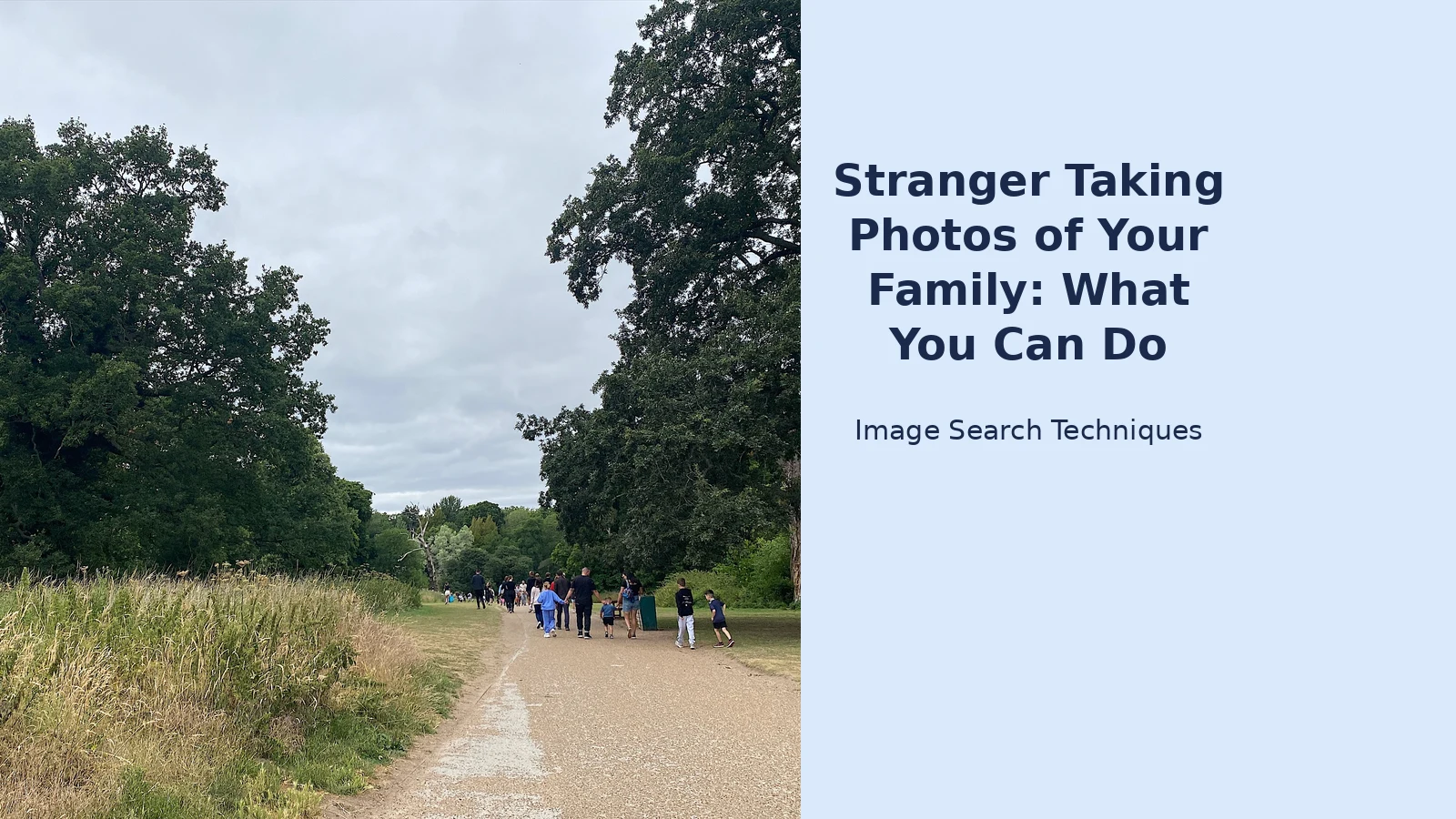
A stranger taking photos of your family is one of the most unsettling things that can happen on an ordinary evening out. You are sitting at a restaurant table with your family when you notice someone across the room holding up a phone. The lens is pointing at your table. Your children are in the frame. You have seconds to decide what to do, and the wrong move can make a bad moment worse. This guide answers a question readers keep asking on Quora: “What should I do if I see someone taking pictures of my family at a restaurant?”
Short answer: In the UK, a stranger can usually photograph your family in a public place, and you cannot force them to delete the photo. In a restaurant or other private premises, the staff can ask them to stop or leave. Stay calm, ask them to stop, and call 101 if they keep following you.
That short answer feels unfair, and most people who read it ask the same follow-up: if the photo is legal, what power do you actually have? More than the short answer suggests, but less than you might hope. The rest of this guide walks through it step by step: what the law says, the exact words to use in the moment, what changes when children are in the photo, and what to do if the photo turns up online later. Everything here is general information, not legal advice. If a situation feels dangerous, leave first and ask questions later.
For the photographer’s side of the same question, including when they do and do not need your permission, see our guide to photographing people in public.
What this guide means by a targeted photo: a photo in which your family is the subject, not the background. Someone photographing a landmark with your family walking past in the distance is a different situation from someone pointing a phone at your table. The test in this guide, background or targeted, is the first thing to settle, because it changes what you can reasonably do next.
Is it illegal for a stranger to take photos of your family?
In the UK, the starting point is blunt: no, not usually. Avon and Somerset Police put it plainly on their public guidance page: there is no law preventing people from taking photographs or a video in public, and that includes taking photos of other people’s children. The policing.uk guide published on 16 October 2026 says the same for England and Wales: generally no, there is no general law prohibiting photography in public places, including photographs of people.
That surprises most parents. It surprises them because it feels wrong, and because a photo of a child feels like it should need permission. But UK law does not work that way. Consent is not required to take a photo in a public place. A police officer cannot order a photographer to delete photos they have taken in public, and neither can you, unless a specific offence applies or a court orders it.
The place matters more than most people realise. A public street, a pavement and a park are public places. A restaurant, a hotel, a shopping centre and a football ground look public because anyone can walk in, but they are private premises. That distinction is the single most useful fact in this guide, and it is the reason the Quora question names a restaurant. On private land, the landowner’s permission is needed to take photographs, and the staff can ask a photographer to stop or to leave. In a restaurant, your real lever is not the law. It is the manager.
| Where it happens | What the photographer can do | What you can do |
|---|---|---|
| Public street, park, pavement | Photograph people, including children, without consent | Ask them to stop, move away, note a description, call 101 if they persist |
| Restaurant, hotel, shopping centre | Only with the premises’ permission, which staff can withdraw | Ask staff to intervene, and staff can ask the photographer to stop or leave |
| Somewhere private, like a home or garden | A photo where a person can expect privacy is likely a breach of privacy law | Report it to the police, as the position is very different from a public place |
| Anywhere, if the photo is indecent | Nothing, it is an offence | Call the police at once, on 999 if a child is at risk |
Four things can turn an otherwise lawful photo into an offence. Voyeurism is an offence under section 67 of the Sexual Offences Act 2003. Upskirting became a specific offence in England and Wales under the Voyeurism (Offences) Act 2019. Photographing children for sexual purposes is an offence. And certain secure locations carry their own restrictions. None of those needs the photo to be taken in secret. What matters is the purpose and the place, not whether the photographer was open about it.
Harassment is the one people reach for most often, and it is the one most often misunderstood. Under the Protection from Harassment Act 1997, harassment means a course of conduct, not a single act. One photo of your family, however unwelcome, is not harassment on its own. A stranger who keeps photographing your family after you have objected, follows you from place to place, or turns up again and again is a different matter. That pattern is what the police can act on. One of the answers on the Quora page gets this wrong, suggesting the police could simply have the person arrested for harassment over a single photo. They could not. Knowing that saves you an argument with the police later, and it tells you what evidence actually helps: a pattern, not a single frame.
What should you do in the moment?
The first thing to settle is the background or targeted test. Look at where the lens is pointing and what is in the frame. If your family is small in the background of a wide shot of a building or a view, you are probably background, and the honest advice is to let it go or move out of shot. If the lens is pointed at your table, your children are the subject, and the photographer is framing them, you are targeted, and the playbook below applies.
The playbook is the ranking asset of this guide: six situations, each with the move that fits it. Read it once now, so the steps are familiar before you need them.
| Situation | Do this | Why it works |
|---|---|---|
| Background shot | Move out of frame or let it pass | Your family is not the subject, and a confrontation over a background shot helps nobody |
| Targeted photo in public | Calmly ask why, then ask them to stop and delete it | Most people stop when asked directly, and a calm ask costs you nothing |
| Targeted photo in a restaurant | Ask a member of staff to intervene | The restaurant is private premises, and staff can ask the photographer to stop or leave |
| They refuse or keep going | Note a description, take a photo of them, and leave | You now have evidence of a pattern, which is what the police need |
| They follow you | Go somewhere busy or inside a building, and call 101, or 999 if you feel threatened | Following changes the picture from a single photo to a course of conduct |
| Photo appears online later | Reverse search the photo, then report it to the platform | Platforms remove photos on their own rules, even where the law does not help |
Here is the playbook as numbered steps, in the order to use them.
- Stay calm and keep your family close. Bring your children to your side. A calm parent is harder to ignore than a shouting one, and shouting is what turns a witness into a participant in someone else’s video.
- Ask them, directly and politely, why they are taking pictures. “Excuse me, why are you photographing my family?” is enough. Listen to the answer. Sometimes the explanation is innocent: they are photographing the restaurant, a friend at the next table, or a dish. If the answer is plausible and the lens moves away, the incident is over.
- Ask them to stop, and ask them to delete the photo. “Please stop taking photos of my children, and please delete the one you just took.” You can ask. You cannot force it. If they delete it, the matter ends there. If they refuse, do not argue the point. A refusal is not an offence, and arguing with a stranger in front of your children is a bad trade.
- In a restaurant, hotel or shop, get the staff involved. This is the step most guides miss, and it is the strongest one you have. Tell a waiter, the manager, or security what is happening. The premises are private, and the staff can ask the photographer to stop or to leave. Use that route before you use any other.
- If they keep going, record the evidence yourself. Take a photo of the person, note what they are wearing, and note the time. A photo of them is evidence, not retaliation. It also tends to end the incident, because most people who photograph strangers do not want to be photographed back.
- Leave if you feel unsafe or uncomfortable. Pack up and move elsewhere, or go inside a secure building. Leaving is not losing. It is the right move whenever the situation feels wrong, and it costs you nothing.
- Call the police if the behaviour persists or turns threatening. In the UK, call 101 for a non-emergency report, or 999 if you feel threatened or a child is at risk. Tell them what happened, where, and that the person kept photographing your family after you asked them to stop. That pattern is what makes it a police matter.
One more point from the AI Overview on this question is worth keeping: do not touch them or their device. Never grab a phone or a camera, and never try to delete a photo by force. Grabbing a device can lead to accusations of assault or criminal damage against you, and it turns you from the person with the complaint into the person the police are looking at. The same goes for the worst advice on the Quora page, which suggests grabbing the phone and breaking it. That is the wrong move. Name it as such if someone suggests it to you, and never do it.
What if your children are in the photo?
Children change how a moment feels, but they do not change the basic law. There is no UK law that bans photographing children in public as such, and Avon and Somerset Police say so explicitly. A stranger photographing your children in a park has not broken the law by the act of taking the photo alone. That is hard to hear, and it is the reason this section exists: the steps are different, even though the law is the same.
First, the line that does matter. Anything sexualised or indecent is a police matter at once. If a photo is taken up a skirt, through a changing room gap, or in any way that sexualises a child, call the police immediately, on 999 if a child is at risk. Do not wait to see whether it happens again. Do not confront the person first. Note what they look like and call.
Second, schools and nurseries can set their own rules. A school is private premises, and it can ban photography on its grounds and at its events. If a stranger is photographing children at a school gate or a school event, tell the school. The school’s rules, not the public photography rules, are what apply there.
Third, keep your own response proportionate. Move your children out of the frame, ask the person to stop, and get staff or the police involved if they do not. Do not post a photo of the stranger online to shame them. That can itself be harassment, and it puts a photo of a real person into circulation over an incident you have not proved. It also teaches your children that the answer to being photographed is to photograph someone else in anger, which is the opposite of the lesson you want them to learn.
Fourth, talk to your children afterwards, briefly and calmly. Tell them that sometimes strangers take photos, that it is not their fault, and that the right move is to come to you. Children who know the plan are calmer in the moment, and calmer children make better witnesses if anything does need reporting.
What if the photo appears online later?
The in-the-moment playbook ends when the photo is taken. The online playbook starts when you find it. The two are separate, and the online one is where a reverse image search earns its keep. If you have a photo of your family that you suspect has been posted, you can search for it and see where it appears, and that tells you what to do next.
To show how that check works in practice, I ran a real photo through it on 15 November 2026. The photo shows a family eating at Pho Hung, a Vietnamese restaurant in Toronto’s Chinatown. It is a public photo from Wikimedia Commons, 3,000 by 1,460 pixels, and it is exactly the kind of scene this guide is about: a family at a restaurant table, photographed while they eat. Run the background or targeted test on it first. The family is the clear subject of the frame, seated at a table and facing towards the camera. They are not background in someone else’s shot of the room. This is a targeted photo, and in a restaurant, which is private premises, the family could have asked the staff to intervene.
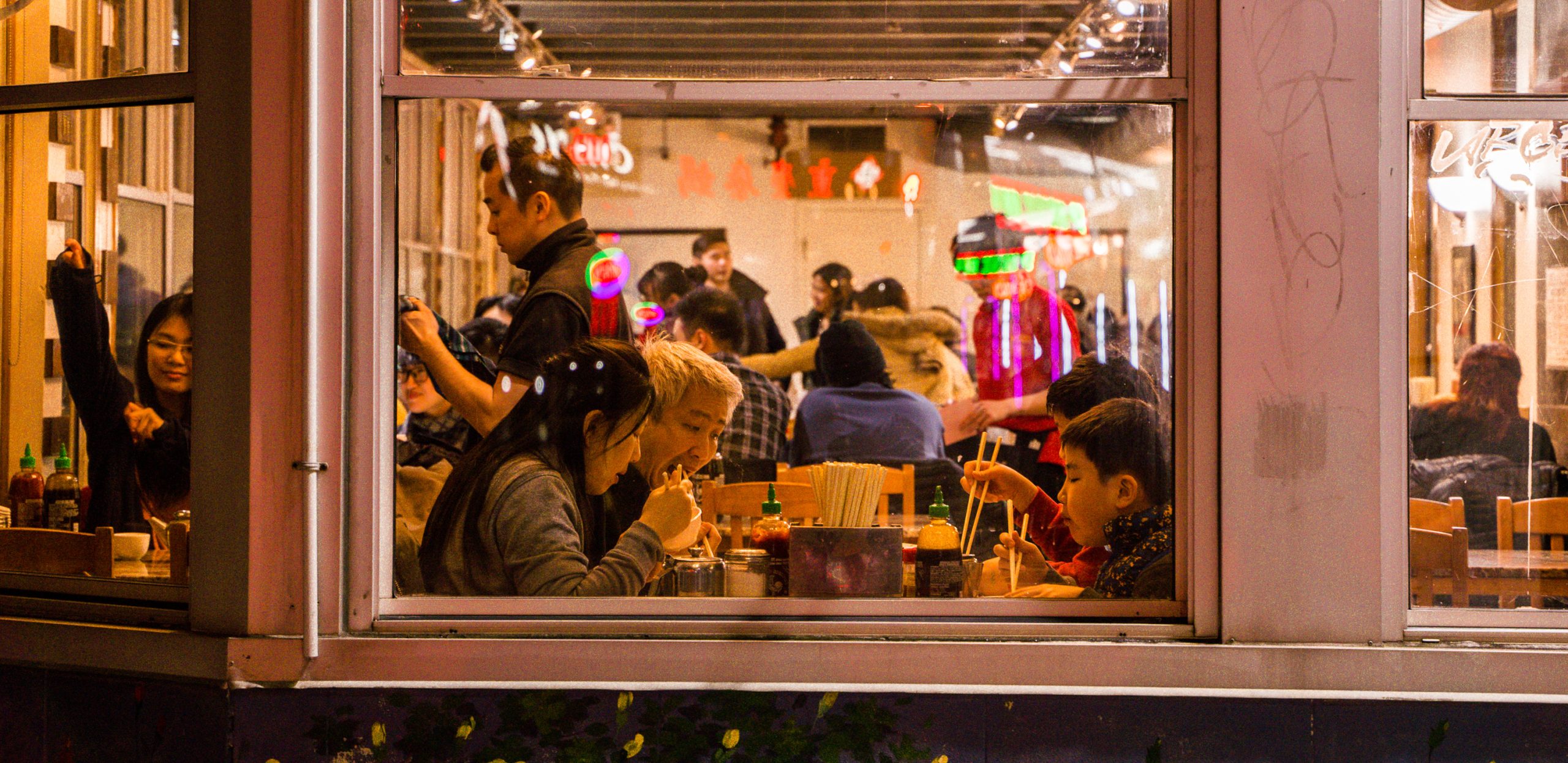
Then I searched the photo itself. TinEye searched more than 86.7 billion images and returned 0 matches, explaining that it had not yet crawled any pages where the image appears. Google Lens failed twice in the same session, both times with the error “No image at the URL”, and returned no count at all. Neither result is a clearance. A zero on TinEye means the photo was not found on pages TinEye has crawled, not that it was never posted. A Lens error means the search did not run, not that there is nothing to find. Both results are reported here as they happened, because a failed check is still information: it tells you to try again later, and to try the upload route instead of the URL route.
| Step | What I did | What happened |
|---|---|---|
| 1. Test the photo | Background or targeted test on the Pho Hung restaurant photo | Targeted: the family is the subject, at a table, facing the camera |
| 2. Test the setting | Restaurant, which is private premises | Staff could ask the photographer to stop or leave |
| 3. TinEye by URL | Searched the image URL on 15 November 2026 | 0 matches across 86.7 billion images, not yet crawled |
| 4. Google Lens by URL | Searched the same URL twice in the same session | Failed both times, “No image at the URL”, no count |
| 5. What it proves | Neither result clears the photo | Retry later, and try uploading the file instead of the URL |
If your own search does find the photo online, the order is simple. First, save the evidence: screenshot the page showing the photo, with the address and the date visible. Second, report it to the platform where it appears, using the platform’s own reporting route for a photo of you or your child posted without permission. Platforms remove photos on their own rules, and a photo of a child posted without a parent’s permission is taken seriously. Third, if the photo is being used to harass you, or if it is intimate in nature, the routes are different and stronger. Our guide to stopping your photos appearing in reverse image search explains the prevention side, and our guide to what to do when a photographer refuses to delete your photos covers the subject-side rights in full. For the search itself, our how-to reverse image search guide walks through the steps on a phone and a computer.
What does the law say in the United States?
This is the short US block, kept separate so it is never confused with the UK position. In the United States, it is generally legal to photograph people in public, including children, because the First Amendment protects photography in public places. A private property owner can set their own rules, so a restaurant or a shop in the US can ask a photographer to leave, just as in the UK. State laws differ on voyeurism and harassment, and the details vary from state to state. The AI Overview on this question is framed around Ohio law, and it gives the same in-the-moment advice as this guide: ask directly, do not touch the person or their device, leave the area if you feel unsafe, and contact the authorities if the behaviour persists. Do not use the US rules in this block as a guide to UK law. They are different systems, and this guide is UK-led.
What should you never do?
A short list, because the mistakes here are specific and they are all avoidable. Never grab a phone or a camera, and never try to delete a photo by force. Never break a device, however angry you are. Never detain anyone or block their way out. Never follow them to find out where they live. Never post their photo online to shame them. Never pay them to delete a photo, because paying once invites a second demand. And never assume that a clean reverse image search means the photo was never taken. A search that finds nothing proves nothing about a photo that was taken five minutes ago on a phone that has never uploaded it anywhere. The photo exists on their device whether or not it exists on the internet, and that is why the in-the-moment steps matter more than the online ones.
The uncomfortable truth behind this guide is that the law gives you less power in a public place than most people expect, and more power in a restaurant than most people realise. Knowing which place you are standing in, asking calmly, getting the staff involved, and keeping a record if the behaviour continues will handle almost every case you are likely to meet. The rest, the online search and the platform report, is for afterwards, when you have time and a clear head. Our face search and photo privacy guide pulls the whole subject together, and our photo scams complete guide covers the reporting routes if the photo turns out to be part of something worse than a rude stranger.
Can I ask a stranger to delete a photo of my family?
Yes, you can always ask, and most people will stop when asked calmly. But on a public street you cannot force them to delete it, because no law gives you that power. In a restaurant or another private premises, ask the staff instead, because they can ask the photographer to stop or leave.
Is it illegal to photograph children in public in the UK?
No, there is no UK law that bans photographing children in public as such, and the police say so plainly. The law changes only if the photo is indecent, sexualised, or part of a pattern of harassment. If anything about the photo feels sexualised or the child is at risk, call the police at once, on 999.
What should I do if a stranger keeps photographing my family after I ask them to stop?
Move your family away from them and note what they look like, what they are wearing, and the time. If they follow you, go somewhere busy or inside a building and call 101, or 999 if you feel threatened. A stranger who keeps photographing you after you object is building the pattern the police need to act.
Can the police make someone delete a photo they took in public?
No, not without a court order. The police have no power to demand deletion of photos taken lawfully in a public place, and neither do you. They can act if an offence applies, such as voyeurism, upskirting, or harassment, and they can seize a device as evidence in a criminal investigation.
What if a photo of my family appears on social media later?
Screenshot the page with the address and date visible, then report the photo through the platform’s own reporting route. A photo of a child posted without a parent’s permission is taken seriously by the platforms. If it is being used to harass you, keep the screenshots and report it to the police on 101.
Can I photograph the stranger back?
Yes, in a public place you can photograph them, and a photo of them is useful evidence if the behaviour continues. Keep it to that. Do not block their path, follow them, or post their photo online to shame them, because that can itself become harassment and it puts an unproven accusation into public circulation.